Gili Air vs Gili Meno: Which Quiet Island to Choose in 2026
Everyone talks about whether to go to Gili Trawangan or skip the party island altogether. But once you have made that call and decided you want something quieter, you hit the real question: Gili Air or Gili Meno?
I have stayed on both islands more times than I can count, and I still find it a tough pick. They are both small, both car-free, and both absolutely beautiful. But they feel different in ways that really matter, depending on what kind of trip you are after. One leans more toward a community with local flavour. The other feels like it could be a private island at the edge of the world.
Here is an honest breakdown of both islands in 2026, so you can stop reading conflicting opinions on travel forums and just book the right one.
The Quick Answer
If you want a quiet island that still has a bit of a social scene, local village life, and plenty of cafes to work from or linger in, go to Gili Air. If you want the kind of stillness where you forget what day it is, the best dining in the Gili Islands, and beaches that look like they belong in a magazine, go to Gili Meno.
But there is a lot of nuance below that, so keep reading.
Vibe and Atmosphere
Gili Air
Gili Air sits right between Trawangan and the Lombok mainland, and its personality reflects that middle-ground position. It has the feel of a relaxed coastal village. You will find local families living alongside yoga teachers, long-stay travellers, and couples who decided Trawangan was too loud. There are sandy paths lined with small shops, a handful of yoga studios, and a string of beachfront bars that do sunset sessions without the thumping bass.
The east coast faces Lombok and catches the sunrise. The west coast gets the golden hour. Walk the whole island in about ninety minutes, and along the way you pass through a genuine neighbourhood. Kids play by the path, chickens cross in front of your bicycle, and the local mosque calls prayer as the light changes.
Gili Air has a social warmth to it. You meet people. You end up sharing a table at dinner because the restaurant is full and nobody minds. It is quiet without being isolating.
Gili Meno
Gili Meno is something else entirely. It is the smallest of the three Gili Islands, and it has always been the least developed. There is no village centre in the way Gili Air has one. Instead, you have a scattering of properties along the coast, a saltwater lake in the middle of the island, and long stretches of beach where you might not see another person for half an hour.
The atmosphere is closer to the Maldives meets the Greek islands. Think white sand, turquoise water so clear you can see fish from the shoreline, and that deep, satisfying silence that only comes from being on an island with no engines. There is a softness to Gili Meno that is hard to describe until you have felt it. Time genuinely seems to move slower here.
Over the past couple of years, Meno has attracted some seriously impressive development on the dining and accommodation front, but it has done so without losing that unspoilt, natural-paradise quality. It is still the island that honeymooners whisper about.
Beaches
Both islands have gorgeous beaches, but the style is different.
Gili Air Beaches
Gili Air's best beaches are on the east and south coasts. The sand is soft, the water is warm, and there are enough beach bars along the strip that you can always find shade and a cold drink. On the east coast, you get Lombok and Mount Rinjani as a backdrop, which makes the sunrise absolutely spectacular. The western beaches are a bit rockier in places but offer more privacy and some of the best sunset views.
The swimming is easy and calm, especially in the shallows. Families with small children tend to gravitate here because the entry is gentle and there is usually someone selling fresh coconuts nearby.
Gili Meno Beaches
Gili Meno has some of the best beaches in all of Indonesia, full stop. The west coast in particular is the kind of white sand you see in travel ads and assume must be Photoshopped. The water goes from pale turquoise in the shallows to a deep blue further out, and on a calm day, the visibility is unreal.
There is less development along the beachfront here, which means more stretches of untouched coastline. You can walk south from the main cluster of properties and find yourself on a beach that feels entirely yours. It is the kind of place where you lay a towel down and do not move for three hours.
The east coast of Meno faces Gili Air, and it is a bit narrower with more coral underfoot, but that is exactly where the best shore snorkelling happens.
Where to Eat
This is where the comparison gets really interesting, because both islands have made serious strides with food in recent years.
Dining on Gili Air
Gili Air has a solid and varied food scene. The east coast strip is lined with restaurants and cafes serving everything from Indonesian classics to Mediterranean sharing plates, wood-fired pizza, and healthy grain bowls. The breakfast and brunch culture is genuinely good here. You will find acai bowls, fresh juices, specialty coffee, and eggs done every way imaginable.
For dinner, there are some lovely beachfront spots where you eat with your feet in the sand and the sound of the waves right there. Seafood is a highlight, with the day's catch grilled over coconut husk and served with sambal and rice. You can eat well on Gili Air without spending much, and that is a big part of its appeal.
The island also has a handful of bars that do a decent cocktail, especially at sunset. Nothing wild, nothing pretentious, just cold drinks and warm light.
Dining on Gili Meno
Gili Meno used to have a reputation for limited food options. That has completely changed. The island now has some of the finest dining in the entire Gili archipelago, and arguably some of the best in this part of Indonesia.
The standout is BASK, a luxury beachfront restaurant and beach club on the western shore. The open kitchen turns out fresh-baked bread, flame-grilled proteins, wood-fired pizza, and lighter coastal plates that balance Asian and Western flavours with real skill. You sit overlooking the ocean with the sun going down, and the food matches the setting. The 35-metre infinity pool at the Beach Club does not hurt either. By day it is long lunches and poolside cocktails. By evening it shifts into a more refined dinner atmosphere that still feels relaxed and barefoot.
Then there is Pomona, a Latin-inspired beachfront spot that is all about bold flavours, open-fire cooking, and generous shared plates. The entire food menu is 100% gluten free, which is a genuine bonus if that matters to you. The ceviche is outstanding. The Peruvian chicken with chimichurri is the kind of dish you think about on the plane home. Pomona also runs weekly events like the Sunday Beach BBQ and Friday evening sessions with music, which bring a welcome spark of energy to Meno's otherwise mellow evenings.
Between BASK, Pomona, and a handful of quieter warungs and cafes scattered around the island, Gili Meno now offers world-class food in a setting that feels almost surreal. For serious food lovers, this is reason enough to choose Meno.
Where to Stay
Accommodation on Gili Air
Gili Air has a wide range of hotels and guesthouses covering every budget. Backpackers and budget travellers will find hostels and simple bungalows that are clean and cheap. Mid-range travellers have plenty of boutique options with pools, air conditioning, and beachfront access. There are a few higher-end villa properties too, though the luxury scene here is more understated than on Meno.
The island's accommodation tends to cluster along the east and south coasts, which means you are usually walking distance from restaurants and the main strip. That convenience is a real plus if you want to settle in and explore on foot.
Accommodation on Gili Meno
Gili Meno has always leaned toward the premium end, and that trend has accelerated. BASK is the anchor of the island's luxury scene, offering beachfront villas, suites, lofts, and studios, many with private pools or plunge pools. The design blends contemporary style with natural materials, and the whole property flows between indoor and outdoor living in a way that feels completely natural on a tropical island.
There are also mid-range options and a few budget-friendly stays, though fewer than on Gili Air. If you are travelling on a tighter budget, you will have more choice on Air. If you want a genuine resort experience with world-class amenities, Meno delivers in a way the other islands do not.
One thing worth noting: because Gili Meno is smaller and less developed, booking ahead is more important here, especially during peak season from July through September.
Snorkelling and Diving
Both islands offer excellent underwater experiences, but the flavour is slightly different.
Gili Air Underwater
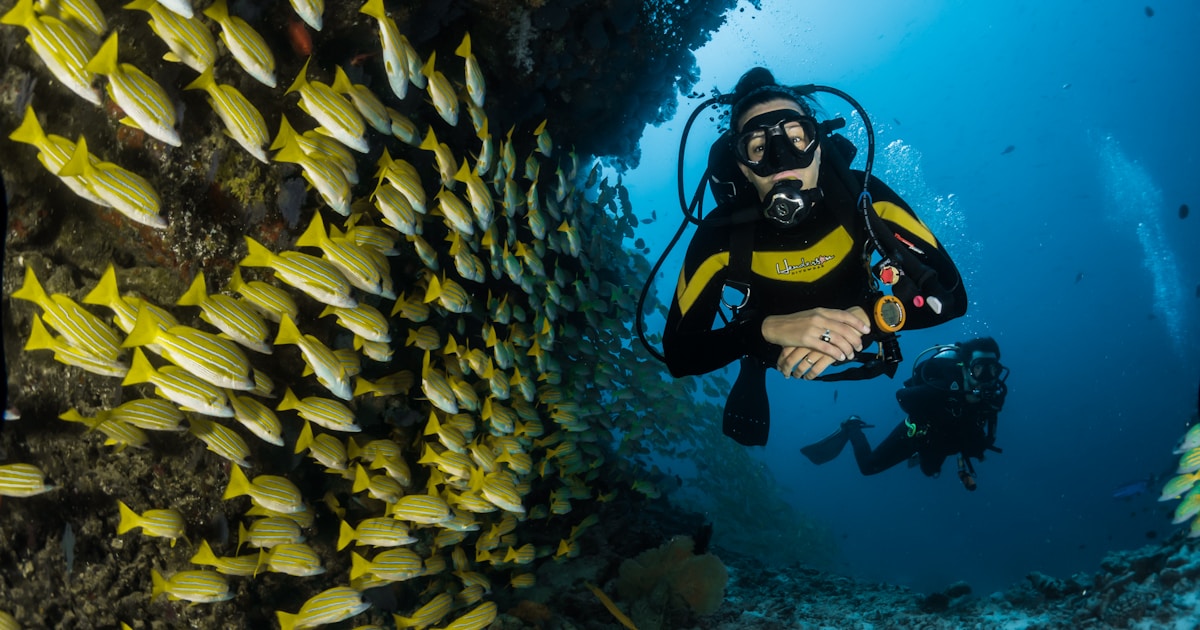
Gili Air has fantastic snorkelling right off the beach, especially along the northeast coast. Turtles are a regular sight, and the coral here is healthy and colourful. There are several dive shops on the island offering PADI courses and fun dives, and the island's position gives easy access to popular dive sites between the three Gilis.
The east coast shore entry is one of the easiest in the Gili Islands, which makes it great for beginners and families. You can literally walk in from the beach and be swimming with turtles within ten minutes.
Gili Meno Underwater
Gili Meno is known as the turtle capital of Indonesia, and that is not an exaggeration. The concentration of sea turtles around the island is remarkable. On a good day, you might see five or six on a single snorkel. The underwater sculpture installation called Nest, designed to support reef regeneration, has become a popular dive site that adds something genuinely unique to the experience.
The water clarity around Meno tends to be slightly better than around Air, likely because there is less boat traffic and fewer swimmers stirring up the sand. For underwater photography or just the wow factor of seeing marine life in crystal-clear conditions, Meno has a slight edge.
Activities Beyond the Beach
What to Do on Gili Air
Gili Air has more going on day to day. Yoga studios are a real draw, with morning and sunset sessions that pull in a regular crowd. The cycling is pleasant, the water sports options include paddleboarding and kayaking, and the village atmosphere means there is always somewhere to wander, browse a local shop, or strike up a conversation.
For digital nomads and longer-stay travellers, Gili Air works well. The WiFi is decent in most cafes, there are co-working-friendly spots, and the rhythm of life here supports productivity without feeling rushed.
What to Do on Gili Meno
Gili Meno's activities tend to be more nature-focused. The bird sanctuary near the lake, the turtle hatchery, and the coastal walks are all highlights. Cycling the full island is a lovely way to spend a morning. And honestly, the main activity on Gili Meno is doing nothing in particular. Reading in a hammock, swimming in the shallows, watching the sunset from the beach.
This is not a criticism. For a lot of travellers, especially those coming from intense Bali schedules or long work stretches, Gili Meno is exactly the kind of reset they need. The island rewards slow living, and trying to fill every hour with activities would miss the point entirely.
If you do want some evening energy, Pomona's weekly events bring rhythm to the week. The Sunday Beach BBQ and Friday sessions offer music, great food, and a social atmosphere that feels special precisely because Meno is so peaceful the rest of the time.
Getting There and Getting Around
Both islands are reached by fast boat from Bali (around two hours) or by local boat from Bangsal harbour on Lombok (around twenty minutes). If you are coming from Bali, most fast boats stop at all three Gili Islands, so you can easily visit both during a trip.
Getting between Air and Meno is simple. Public boats run throughout the day, and the crossing takes about ten minutes. Private boats can also be arranged. Many travellers split their trip, spending a few days on one island and a few on the other.
On both islands, you get around by walking, cycling, or taking a horse-drawn cidomo cart. No cars, no motorbikes. That is part of the magic.
Head-to-Head Comparison
| Gili Air | Gili Meno | |
|---|---|---|
| Vibe | Relaxed village, social, bohemian | Secluded, romantic, untouched |
| Best for | Couples, solo travellers, digital nomads, families | Honeymooners, slow travellers, food lovers |
| Beaches | Beautiful, with bars and facilities | Stunning, more empty, postcard-perfect |
| Dining | Varied and affordable | World-class (BASK, Pomona) |
| Nightlife | Light, a few sunset bars | Very minimal, resort-focused |
| Snorkelling | Excellent, easy access | Outstanding, best turtle encounters |
| Budget range | Budget to mid-range friendly | Mid-range to luxury |
| Social scene | Friendly and community-driven | Intimate, private |
| Walk around | About 90 minutes | About 90 minutes |
| Best time | Year-round, peak July to September | Year-round, peak July to September |
So Which One Should You Pick?
Choose Gili Air if you want a quiet island that still has a pulse. If you like bumping into people at breakfast, having options for dinner, and the kind of place where a week flies by because you keep finding new corners to enjoy. Air is perfect for solo travellers, couples who want some variety, families with children, and anyone who wants peace without total isolation.
Choose Gili Meno if you want to truly disappear for a while. If your idea of a perfect holiday is waking up to nothing but birdsong, spending the morning snorkelling with turtles, and ending the day with a world-class dinner on the beach. Meno is the island for honeymooners, anniversary trips, and anyone who has been moving too fast and needs to stop completely. The dining scene alone, anchored by places like BASK and Pomona, makes it worth the trip even if you are not the sit-on-a-beach-all-day type.
And here is the thing nobody tells you: you do not have to pick just one. The boat between them takes ten minutes. Plenty of travellers spend three nights on Air and two on Meno, or the other way around. You get the village warmth and the total escape in a single trip.
Plan Your Island Trip
Ready to start planning? Browse the full Gili Air directory for restaurants, hotels, and activities, or explore the Gili Meno directory to find where to stay and eat. If you have more time, check out Gili Trawangan too, because spending a day on the big island is always worth it, even if you sleep on the quiet side of the archipelago.
For more detailed guides, read our posts on the best beaches across the Gili Islands, the best diving and snorkelling spots, or our full Gili Meno travel guide.
Tags