Gili Islands vs Nusa Islands: Which to Choose in 2026
If you are planning a trip to Indonesia in 2026, chances are you have narrowed your island options down to two contenders: the Gili Islands off the coast of Lombok, and the Nusa Islands just southeast of Bali. Both groups pop up in every "best islands in Indonesia" list, both promise incredible water, and both sit close enough to Bali that you could easily add them to a longer trip.
But beyond the surface, these two island groups could not be more different. The Gilis are car-free coral islands with white sand, world-class diving, and a food scene that has genuinely surprised me over the last few years. The Nusas are volcanic, rugged, and dramatic, with towering cliffs, strong currents, and a vibe that leans more adventurous than relaxed.
I have spent serious time on both, and here is my honest take on which one suits which kind of traveller.
The Quick Comparison
Before we get into the details, here is a side-by-side snapshot:
| Category | Gili Islands | Nusa Islands |
|---|---|---|
| Number of islands | 3 (Trawangan, Meno, Air) | 3 (Penida, Lembongan, Ceningan) |
| Getting there | Fast boat from Bali (2hrs) or Lombok (15min) | Fast boat from Sanur, Bali (30-45min) |
| Beaches | Flat, white sand, calm turquoise water | Dramatic cliffs, wild surf, hidden coves |
| Motor vehicles | None whatsoever | Scooters and cars everywhere |
| Diving and snorkelling | World-class, turtles daily | Manta rays, strong currents |
| Food scene | Outstanding, from street food to fine dining | Good local warungs, fewer upscale options |
| Nightlife | Yes, especially Gili Trawangan | Quiet, very limited |
| Vibe | Laid-back, barefoot, social | Adventurous, rugged, exploratory |
| Budget per day | $40-300+ depending on style | $30-200+ depending on style |
| Best for | Couples, divers, foodies, groups | Adventure seekers, photographers, hikers |
Getting There and Getting Around
The Nusa Islands win on convenience if you are already in south Bali. Boats leave from Sanur multiple times a day, and you can be on Nusa Lembongan in about 30 minutes. Nusa Penida takes a little longer but it is still under an hour. Once there, though, getting around requires scooters or hiring a driver. The roads on Nusa Penida in particular are steep, narrow, and sometimes genuinely treacherous. If you are not confident on a scooter, you will want to hire someone to drive you around, and that changes the cost calculation.
The Gili Islands take a bit longer to reach. From Bali, fast boats run daily and the crossing takes about two hours. From Lombok, you can be there in 15 minutes by public boat. But once you arrive, something magical happens: you step off the boat and there is not a single engine in earshot. No cars, no motorbikes, no scooters. Just bicycles, horse-drawn carts called cidomos, and your own two feet. It sounds like a small thing, but the absence of traffic noise completely changes how a place feels. You walk down sandy paths, hear waves and birds, and your shoulders drop about two inches within the first hour.
Getting between the three Gilis is simple. Small boats shuttle between Trawangan, Meno, and Air multiple times per day for a few dollars. You can easily visit all three islands in a single trip, which means you get three distinct experiences without any of the hassle of renting vehicles or dealing with traffic.
Beaches and Scenery
This is where the two island groups diverge most sharply.
The Nusa Islands are volcanic and dramatic. Nusa Penida is famous for spots like Kelingking Beach, where a T-Rex-shaped cliff drops hundreds of metres to a tiny strip of sand below. Angel's Billabong, Broken Beach, and Crystal Bay are all stunning to look at and photograph. But many of the most famous viewpoints involve steep hikes, slippery trails, and crowded photo spots. Some of the beaches are difficult to actually swim at because of strong currents and rough surf.
The Gili Islands are flat, sandy, and surrounded by calm water. The beaches here are the kind you picture when someone says "tropical paradise." White sand, shallow turquoise water that stays warm year-round, and palm trees leaning over the shoreline. You can walk the entire coastline of Gili Meno in about 90 minutes, and nearly every stretch of sand is swimmable. The west coast of Meno, in particular, feels almost unreal. The water is so clear you can see fish from the shore, and during low season you might have entire stretches of beach completely to yourself.
If you want jaw-dropping cliffs and dramatic landscapes for your camera roll, the Nusas deliver. If you want soft sand between your toes and lazy days floating in warm, calm water, the Gilis are hard to beat.
Diving and Snorkelling
Both island groups offer fantastic underwater experiences, but the type of diving is quite different.
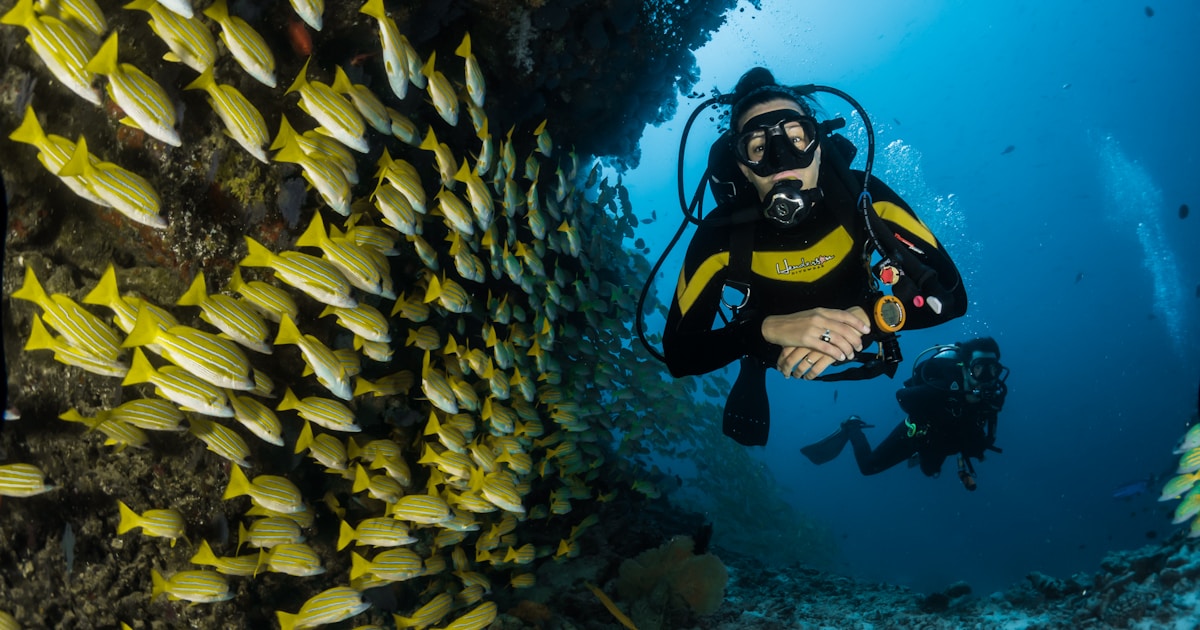
The Gili Islands are famous for turtles. I am not exaggerating when I say you will almost certainly see green sea turtles on every single dive, and often while snorkelling right off the beach. Gili Meno is known as the turtle capital of Indonesia for good reason. The reefs around the three islands are healthy, visibility is usually excellent, and the diving suits everyone from absolute beginners to experienced divers. You can get your PADI certification here in some of the best conditions imaginable, with warm water, gentle currents, and patient instructors who have been teaching in these waters for years.
The Gilis also have some truly unique underwater attractions. The Nest sculpture installation off Gili Meno is an underwater art gallery that doubles as an artificial reef, and it is genuinely one of the most memorable things I have done while diving anywhere in Southeast Asia.
The Nusa Islands are better known for manta ray encounters. Manta Point, off the south coast of Nusa Penida, is one of the best spots in the world to see these enormous creatures up close. Crystal Bay is another highlight, with the chance to spot the elusive mola mola (ocean sunfish) during the right season. The diving here tends to be more advanced, though. Currents can be strong and unpredictable, water temperatures drop significantly at depth, and the conditions are not always beginner-friendly.
If you are a new diver or a snorkeller who wants easy, reliable underwater encounters, the Gilis are the better choice. If you are an experienced diver chasing manta rays and do not mind tougher conditions, the Nusas offer something special.
Food and Dining
This is where the Gili Islands have pulled ahead in recent years, and honestly, it is not even close anymore.
The Nusa Islands have plenty of decent warungs and a growing number of tourist-oriented cafes, especially on Nusa Lembongan. You can eat well and affordably, and the local Indonesian food is solid. But the dining scene has not matured the way it has on the Gilis. If you are looking for a meal that genuinely surprises you, or a restaurant where the setting and the food combine into something memorable, the Nusas do not have many options in that league yet.
The Gili Islands, on the other hand, have developed a food scene that rivals much bigger destinations. On Gili Trawangan, you will find everything from the legendary night market, where you can eat grilled fish for a few dollars, to international restaurants serving sushi, Thai, Italian, and Mediterranean food. Gili Air's cafes are popular with the creative crowd, offering specialty coffee and healthy bowls in gorgeous settings.
But the real revelation is Gili Meno. The quietest of the three islands has become the culinary destination of the group, and honestly, one of the best places to eat anywhere in eastern Indonesia. BASK, a luxury beachfront restaurant on Meno's west coast, has set a new standard with its open kitchen, wood-fired seafood, fresh daily bread, and a wine list that would not look out of place in a capital city. The setting, right on the beach with sunset views stretching across to Bali's Mount Agung, is the kind of thing that makes you put your phone down and just sit there for a moment.
Right along the shore, Pomona brings something completely different to the table. It is a Latin-inspired beachfront spot built around open-fire cooking and big, generous shared plates. The entire food menu is 100% gluten free, which is worth knowing, and the flavours pull from South and Central America. Think ceviches, soft shell crab arepas, jackfruit carnitas tacos, and picanha steak with chimichurri. They run a Sunday Beach BBQ and regular Friday Sessions with live music that set the tone perfectly for a long island evening. It is the kind of place where you plan to stay for an hour and end up closing the place down.
Between the two of them, BASK and Pomona have turned Gili Meno into a destination for food lovers, not just beach lovers. If great dining matters to you on holiday, the Gilis are the clear winner here.
Accommodation
The Nusa Islands offer a wide range of places to stay, from backpacker hostels to mid-range hotels and a handful of nicer properties. Nusa Lembongan probably has the best selection, with some lovely boutique hotels overlooking the water. Nusa Penida's accommodation is more scattered and basic, though it is improving year by year. Nusa Ceningan is small and tends to attract backpackers and surfers.
The Gili Islands cover a broader spectrum. Gili Trawangan has everything from party hostels to upscale resorts. Gili Air sits in the middle, with a good mix of boutique hotels and quiet guesthouses. And Gili Meno has repositioned itself as the luxury option, with properties like BASK offering private pool villas, a 35-metre infinity pool at the beach club, and the kind of design-led accommodation where every detail has been thought through.
What sets the Gilis apart is the variety packed into such a small area. You could spend three nights in a luxury villa on Meno, then hop a five-minute boat to a laid-back bungalow on Air, and finish with a social hostel on Trawangan. Three completely different experiences in a single trip.
Nightlife and Atmosphere
If nightlife matters to you, the Gilis win by a wide margin. Gili Trawangan has earned its reputation as the party island, with beach bars, live music, DJ sets, and full moon parties that draw crowds from across Indonesia. Even if you are not a big partier, Trawangan has enough cocktail bars and late-night spots to keep most people happy.
Gili Meno and Gili Air offer a quieter alternative. Meno's BASK Beach Club is more about golden-hour cocktails and live music by the infinity pool than a raging party scene. It is sophisticated without being stuffy. On Air, you will find mellow beach bars with acoustic sets and craft cocktails that pair perfectly with the island's bohemian vibe.
The Nusa Islands are quiet at night. Nusa Lembongan has a few bars, but nothing that could be described as a nightlife scene. If you want your evenings to involve nothing more than dinner and stargazing, the Nusas deliver that beautifully. But if you want options, the Gilis give you the choice.
Budget Breakdown
Both island groups can be done on a range of budgets, but the cost profiles are a little different.
| Expense | Gili Islands | Nusa Islands |
|---|---|---|
| Budget accommodation | $15-40/night | $10-30/night |
| Mid-range hotel | $60-150/night | $50-120/night |
| Luxury resort | $200-600+/night | $150-300/night |
| Local meal | $3-8 | $2-6 |
| Restaurant dinner | $15-50 | $10-25 |
| Diving (2 dives) | $60-90 | $70-100 |
| Scooter rental | N/A (no motors) | $8-12/day |
| Island transport | Walking/cycling (free) | Scooter or driver ($25-40/day) |
The Nusas can be slightly cheaper on a tight budget, mainly because accommodation and food prices are a touch lower. But the hidden cost is transport: you will almost certainly need to rent a scooter or hire a driver to get around Nusa Penida, and those costs add up across a few days.
The Gilis save you on transport since walking and cycling cost nothing, but the top end of the dining and accommodation scale reaches higher. That said, budget travellers do extremely well on the Gilis too. The night market on Trawangan is one of the best-value meals in all of Indonesia, and simple beachfront bungalows on Gili Air start at very reasonable rates.
Which Should You Choose?
Here is my honest recommendation.
Choose the Nusa Islands if you want dramatic scenery, you are comfortable on a scooter, you are chasing manta rays, and you do not need much nightlife or fine dining. The Nusas are perfect for a two or three-day adventure add-on to a Bali trip, especially if you want incredible photos and do not mind roughing it a little.
Choose the Gili Islands if you want a proper island escape with white sand beaches, world-class diving, outstanding food, and the freedom to island-hop between three distinct destinations without a vehicle in sight. The Gilis work for everyone, from budget backpackers to couples splurging on a luxury villa with a private pool. Gili Meno in particular has become something special in recent years. It feels like the Maldives meets the Greek islands: unspoilt, naturally beautiful, and home to some of the best dining in eastern Indonesia.
Or better yet, do both. If you have 10 days or more in Indonesia, you could easily spend three or four days on the Nusa Islands exploring cliffs and diving with mantas, then take a boat back to Bali and catch a fast boat to the Gilis for four or five days of white sand, turtle encounters, and long beachfront dinners. It is one of the best combinations you can do in Southeast Asia.
Plan Your Gili Islands Trip
Ready to start planning? Browse hotels on Gili Meno, explore restaurants on Gili Trawangan, or check out dive shops across the islands. If you are trying to narrow down which of the three Gilis suits you best, our island comparison guide breaks it all down.
And if you want a head start on planning what to eat, our complete restaurant guide covers every island and every budget. Trust me, the food alone is worth the trip.
Tags