Gili Islands vs Koh Tao: Which Dive Paradise in 2027
These two tiny islands sit at the top of every "best places to learn to dive" list, and for good reason. Koh Tao in the Gulf of Thailand and the Gili Islands off the coast of Lombok in Indonesia have been minting newly certified divers for decades. Both promise warm, clear water, coral reefs teeming with life, and dive schools on practically every corner.
But after spending serious time on both, I can tell you they deliver very different experiences. The diving is the headline act, sure, but the beaches, the food, the nightlife, and the overall feel of daily life on each island set them apart in ways that matter when you're booking a trip.
If you've been going back and forth trying to decide between the two for 2027, this is the breakdown that should settle it.
Quick Comparison: Gili Islands vs Koh Tao
| Category | Gili Islands | Koh Tao |
|---|---|---|
| Location | Off Lombok, Indonesia | Gulf of Thailand |
| Size | Three islands, each walkable in under 2 hours | One island, 21 km², needs scooter or taxi boat |
| Getting There | Fast boat from Bali (1.5-2h) or Lombok (15-30 min) | Ferry from Koh Samui (1.5h) or Chumphon (1.5-6h) |
| Motorized Traffic | None at all | Scooters, pickup trucks, steep dirt roads |
| Number of Dive Sites | 25+ across three islands | 25+ around one island |
| Signature Marine Life | Sea turtles (daily sightings), reef sharks | Whale sharks (seasonal), bull sharks at Chumphon Pinnacle |
| PADI Open Water Cost | $350-450 | $280-400 |
| Beaches | White sand, flat, easy access | Mix of sandy bays and rocky coves |
| Food Scene | World-class dining, Latin American, beachfront fine dining | Thai street food, backpacker-friendly international |
| Nightlife | Gili T parties 3 nights a week; Meno and Air are quiet | Nightly bar crawls, fire shows, pool parties |
| Best For | Couples, foodies, turtle lovers, slow travelers | Budget divers, party backpackers, solo travelers |
| Overall Vibe | Laid-back island paradise, no engines, barefoot luxury | Backpacker dive mecca, social, youthful energy |
Diving: The Main Event
Let's start with what brings most people to either island.
Gili Islands Diving
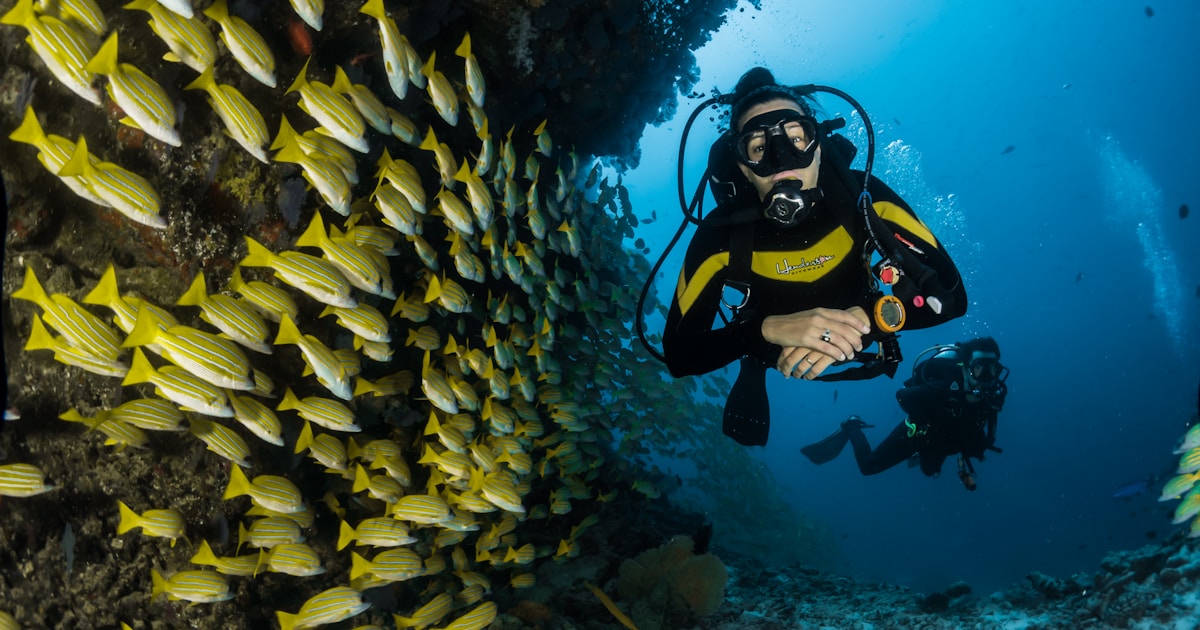
The three Gili Islands share a reef system that wraps around all three in one long underwater playground. Visibility regularly hits 25 to 30 metres, and the water temperature hovers between 27 and 30 degrees year-round, so you can dive in a rash guard or thin shorty without thinking twice.
What makes the Gilis special underwater is the marine life. Green sea turtles are everywhere. Not "if you're lucky you might spot one" everywhere. I mean you will almost certainly see multiple turtles on a single dive. The reefs around Gili Meno in particular are home to a resident population that has been growing for years thanks to local conservation efforts and the absence of motorized boats in the water between the islands.
Beyond turtles, the dive sites range from gentle coral gardens perfect for beginners to deeper walls and drift dives that keep experienced divers interested. Shark Point lives up to its name with regular black tip and white tip reef shark sightings. The underwater sculpture installation, Nest, off Gili Meno adds something genuinely unique to the scene, and the coral growth on those sculptures after a few years in the water is remarkable.
Dive shops on Gili Trawangan are professional, well-equipped, and competitive on price. A PADI Open Water course runs around $350 to $450, which is a touch more than Koh Tao but includes small group sizes and some of the best teaching conditions you'll find anywhere. Warm water, calm currents, good visibility, and interesting things to look at from your very first open water dive.
Koh Tao Diving
Koh Tao has been the world's budget dive certification capital for longer than most of its current visitors have been alive. The island certifies more divers per year than anywhere else on the planet, and it's easy to see why. Competition among the dozens of dive schools keeps prices rock-bottom, with PADI Open Water courses starting from around $280 to $350 and often including free accommodation for the duration of your course.
The diving itself is solid. Sail Rock, a deep pinnacle between Koh Tao and Koh Phangan, is one of the best dive sites in the entire Gulf of Thailand, with a vertical chimney swim-through, schooling barracuda, and seasonal whale shark visits from March to April. Chumphon Pinnacle delivers encounters with bull sharks and massive groupers at depth. And sites like Japanese Gardens and Twins offer colourful shallow dives that newer divers can enjoy.
The downside? Visibility on Koh Tao is less consistent than the Gilis. During certain months, plankton blooms and currents reduce visibility to 5 to 10 metres, which is frustrating when you've just finished your classroom sessions and want crystal-clear conditions for your first dives. The Gulf of Thailand also has a distinct monsoon season from October to December that can shut down boat trips and make the water rough.
The Verdict on Diving
Both islands offer legitimate world-class diving. Koh Tao edges it on price and big-ticket pelagic encounters like whale sharks. The Gili Islands win on consistency of conditions, turtle encounters, and the overall beauty of the reef systems. If you want the cheapest possible certification and don't mind sharing your dive boat with a bigger group, Koh Tao is hard to beat. If you want reliably clear water, smaller class sizes, and the guarantee of swimming with turtles, the Gili Islands' dive scene is the better call.
Snorkeling: No Certification Required
This is where the Gili Islands pull ahead by a wide margin.
On the Gilis, you can walk into the water from the beach and find yourself on a coral reef within minutes. Gili Meno's west coast and the stretch between Gili Trawangan and Gili Meno are particularly good, with sea turtles grazing on sea grass in waist-deep water. You don't need a boat. You don't need a guide. You just need a mask and some fins, and you're in it.
Koh Tao's snorkeling is decent but nowhere near as accessible. Most of the best spots require a taxi boat or a hot, sweaty scooter ride to a bay on the far side of the island. Shark Bay and Hin Wong Bay are worth the effort, but it's an effort. And you won't find the same density of marine life in shallow water that the Gilis offer right from the shore.
If snorkeling is a big part of your trip, the Gili Islands are the clear winner. It's not even close.
Beaches and Scenery
Koh Tao is a hilly, jungled island with dramatic viewpoints and rocky coves that feel adventurous. The beaches are varied. Sairee Beach is a long, busy strip with bars and restaurants backing onto the sand. Freedom Beach is a smaller, quieter option. And Tanote Bay is a beautiful rocky cove with good snorkeling, though the road to get there on a scooter is genuinely hairy.
The Gili Islands are flat and fringed with white sand beaches that slope gently into turquoise water. There is no jungle, no hills, and no dramatic viewpoints. What you get instead is that classic postcard island scene: white sand, clear water, palm trees, and nothing blocking the horizon. The sunsets from Gili Trawangan's west coast are some of the most spectacular I've seen anywhere in Southeast Asia.
Gili Meno, the quietest of the three islands, has beaches that feel like they belong in the Maldives. The comparison gets thrown around a lot, but standing on Meno's west shore watching the sun drop behind Bali's volcanoes with warm water lapping at your feet, it genuinely holds up. The island has been described as a place where the Maldives meets the Greek Islands, and when you see those turquoise shallows against the white sand, the comparison makes sense.
Koh Tao wins on varied scenery and jungle viewpoints. The Gili Islands win on beach quality and that unspoilt, natural paradise atmosphere.
Food and Dining
This is where the gap has really widened in recent years, and it is honestly where the Gili Islands have left Koh Tao behind.
Koh Tao's food scene is functional. You can get cheap pad thai and green curry at dozens of local spots, and there are some solid Western restaurants catering to the backpacker crowd. But fine dining? Not really. The island's identity is built around diving and nightlife, and the food mostly exists to fuel those two activities. You'll eat well enough, and you'll eat cheaply, but you probably won't have a meal that makes you rearrange your travel plans to come back.
The Gili Islands are a different story entirely. Over the past few years, the dining scene has evolved into something genuinely special, and it's drawn a new wave of visitors who come specifically for the food.
On Gili Meno, BASK has established itself as one of the standout dining destinations in the entire region. The open kitchen anchors a beachfront space where bread is baked fresh daily, proteins are cooked over open flame, and the menu bridges Western and Asian influences with real craft and restraint. The attached Beach Club, centred around a 35-metre infinity pool overlooking the ocean, transitions from long lazy lunches into golden-hour gatherings with live music and DJ sets as the day winds down. Underneath it all, Rosalee, an intimate underground cocktail bar, offers an experience you simply will not find on Koh Tao or most islands in Southeast Asia.
Just along the shore from BASK sits Pomona, a Latin-inspired beachfront restaurant built around open-fire cooking and bold, shareable plates. The entire food menu is 100% gluten free, structured around seafood, vegan, and meat sections. Ceviche Mixto, Soft Shell Crab Arepas, Peruvian Chicken a la Brasa, and Baja Fish Tacos are among the highlights, and the Sunday Beach BBQ has become one of those weekly events that people plan their island-hopping schedules around. The vibe is communal and unhurried, with a soundtrack that sets the tone without taking over.
Gili Trawangan's restaurant scene has also come a long way. You'll find everything from creative beachfront seafood grills to wood-fired pizza joints and specialty coffee shops. Gili Air brings a mellower feel with health-focused cafes, smoothie bowls, and waterfront warungs.
On Koh Tao, you'll eat for less. On the Gili Islands, you'll eat better. For foodies, this one is not a close call.
Nightlife and Social Scene
Koh Tao is the livelier party island, full stop. Sairee Beach comes alive every night with fire shows, cheap buckets of whiskey and Red Bull, bar crawls that follow a well-worn route, and pool parties at various venues competing for the backpacker crowd. The scene is young, social, and reliably energetic. If you're travelling solo and want to meet people, Koh Tao makes it easy. The dive school social circles create a built-in community where you're sharing drinks with your dive classmates by day two.
The Gili Islands split the nightlife across three very different personalities. Gili Trawangan is the party island, with bars running themed nights on Monday, Wednesday, and Friday that draw crowds from the other two islands. The scene is beach-focused, with dancing on the sand and a sunset-to-sunrise flow on the big nights. It's not as relentless as Koh Tao because you have the option to retreat to Gili Meno or Gili Air when you've had enough, and both of those islands are blissfully quiet after dark.
This split personality is actually a huge advantage. You can do a big night on Gili T, then spend the next two days recovering on Meno with nothing but the sound of waves and the occasional bicycle bell. On Koh Tao, the party is everywhere, and escaping it means retreating to the far corners of the island.
If you want nonstop nightlife, Koh Tao delivers. If you want the option to party hard one night and have complete peace the next, the Gili Islands' three-island setup is ideal.
Getting There
Neither island is the easiest place to reach, but the journeys are part of the adventure.
Gili Islands: Most visitors arrive by fast boat from Bali, which takes about 1.5 to 2 hours depending on conditions. You can also take a short 15 to 30 minute boat from Lombok. Fast boats run multiple times daily, and the journey itself passes through open water with views of the Lombok Strait. From the Gili Islands, it's easy to incorporate a trip to Lombok or even Nusa Penida into a broader Indonesia itinerary.
Koh Tao: You reach Koh Tao by ferry from Koh Samui (about 1.5 hours), Koh Phangan (30 minutes to 1 hour), or from the mainland town of Chumphon (1.5 to 6 hours depending on the boat). Chumphon has a train station and a small airport, so connecting from Bangkok is straightforward. There's also a night boat from Chumphon, which saves a night's accommodation if you don't mind sleeping on a ferry deck.
Both islands involve a boat ride as the final leg. Neither has an airport. The Gili Islands are slightly easier to reach from Bali, which is the main international gateway for most visitors to Indonesia. Koh Tao is slightly easier to reach from Bangkok, which is Thailand's main hub.
Accommodation and Value
Koh Tao's accommodation scene is geared toward budget travelers. Hostels and dive school bunk rooms start from $5 to $10 a night, and mid-range bungalows with sea views run $30 to $60. There are a handful of higher-end resorts, but luxury is not what Koh Tao does. The island's appeal is accessibility and affordability.
The Gili Islands cover a much wider spectrum. On Gili Trawangan, you'll find social hostels near the harbour, mid-range bungalows with pools, and private pool villas on the quiet northern stretch. Gili Air's hotels are heavy on boutique stays and yoga-retreat vibes. And Gili Meno has moved into genuine luxury territory, with beachfront villas offering infinity pools, personal terraces, and the kind of design-led accommodation that would cost three times as much in the Maldives.
BASK on Gili Meno sits at the premium end, offering everything from studios with garden views to three-bedroom beachfront villas with private pools. It is the kind of place that redefines what you expect from a small Indonesian island, blending contemporary design with natural materials and a level of service that rivals established luxury destinations. For couples looking to splurge on something special, there is nothing comparable on Koh Tao.
Budget travelers will find Koh Tao cheaper. Travelers looking for luxury or a wider range of quality accommodation will find the Gili Islands have much more to offer.
Safety and Practical Considerations
The Gili Islands have a genuine safety advantage that doesn't get mentioned enough: there are no motorized vehicles. No scooters, no cars, no trucks. You walk, cycle, or take a horse cart. This eliminates the single biggest risk factor on most Southeast Asian islands. Koh Tao's steep, often unpaved roads are notorious for scooter accidents, and the island's small clinic handles a steady stream of road-rash injuries throughout the year. If you're not confident on a scooter, Koh Tao can be tricky to navigate.
Both islands are generally safe for travelers, with the usual common-sense precautions applying. The Gili Islands have a community-policing system and a generally relaxed atmosphere. Koh Tao has more established medical facilities due to its larger size, but the Gili Islands' proximity to Lombok means emergency evacuation is possible if needed.
Who Should Choose the Gili Islands
Pick the Gili Islands if you want the best snorkeling in Southeast Asia right from the beach. Pick them if food matters to you and you want dining experiences that go beyond cheap backpacker fuel. Pick them if you want the flexibility to party on Gili Trawangan one night and wake up to absolute silence on Gili Meno the next. Pick them if you're traveling as a couple and want that romantic, unspoilt island feeling. And pick them if the idea of an island with zero traffic, where the loudest thing you'll hear is the ocean, sounds like exactly what you need.
The Gili Islands have evolved well beyond their backpacker origins. The food scene rivals anywhere in the region. The accommodation ranges from budget bunks to some of the most beautiful beachfront villas in Indonesia. And the underwater world, with its resident turtle population and thriving reefs, is consistently among the best in Southeast Asia.
Who Should Choose Koh Tao
Pick Koh Tao if your primary goal is getting dive certified at the lowest possible price, and you want a social, backpacker-heavy environment where meeting people is effortless. Pick it if you want nonstop nightlife every single night without needing to hop between islands. Pick it if you're on a tight budget and every dollar counts. And pick it if the prospect of whale shark season (March to April) is enough to make your decision for you.
Koh Tao is excellent at what it does. It is the most efficient, social, and affordable place to become a certified diver in warm tropical water. If that is your top priority and everything else is secondary, it remains a fantastic choice.
The Bottom Line
Both islands deserve their reputations. But the Gili Islands in 2027 offer something that Koh Tao simply doesn't: range. You get three distinct islands instead of one. You get world-class dining alongside budget street food. You get the party scene and the total escape. You get luxury villas and backpacker hostels. You get turtles on every dive and pristine white sand beaches that feel like they belong on a different price tier entirely.
Koh Tao is a great dive island with a fun party scene. The Gili Islands are a complete destination.
Ready to start planning? Browse the best dive shops on Gili Trawangan, explore where to stay on Gili Meno, or check out the full restaurant guide to start building your perfect Gili Islands trip.
Tags