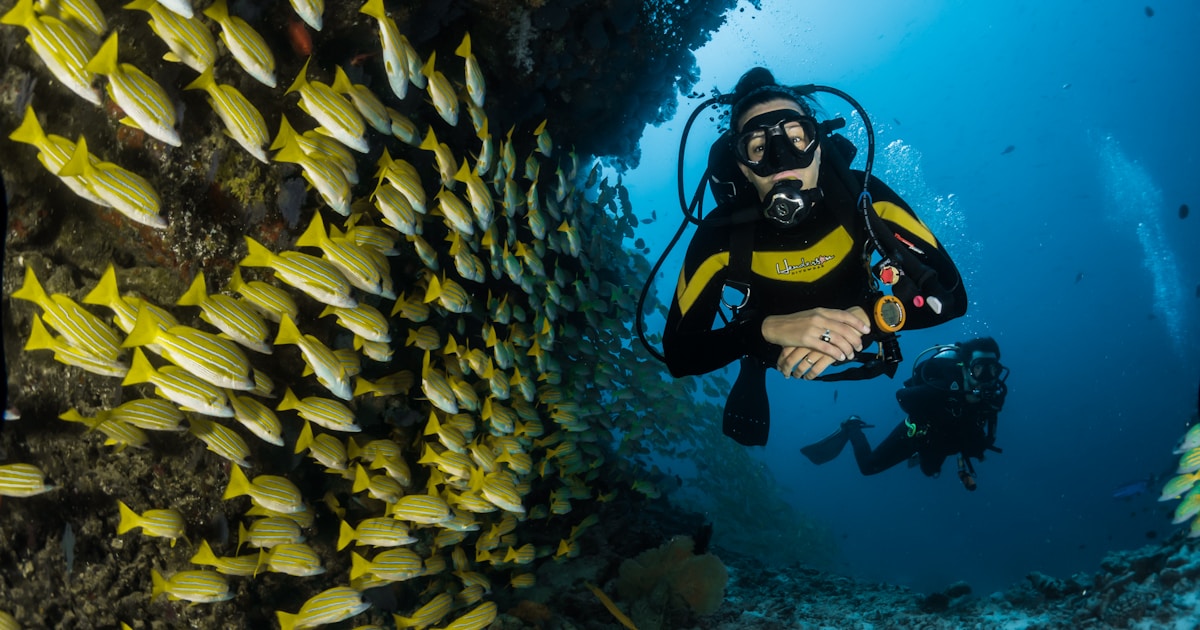
Night Diving on the Gili Islands: A Complete Guide 2027
There's something about slipping below the surface of the ocean after the sun has set that changes everything you thought you knew about diving. Daytime reefs are beautiful, sure. But at night? The whole underwater world flips. Creatures you never see during the day come crawling out of their hiding spots, corals pulse with fluorescent color under UV light, and the beam of your torch becomes your entire universe. If you've been diving around the Gili Islands during the day and thought you'd seen it all, you haven't even scratched the surface.
Night diving on the Gili Islands is one of those experiences that sticks with you long after you've toweled off and sat down for dinner. The three islands sit in a pocket of the Lombok Strait where nutrient-rich currents attract a staggering variety of marine life, and when darkness falls, the reef transforms into something completely different. This is your full guide to making it happen.
Why the Gili Islands Are Perfect for Night Diving
The Gili Islands have earned their reputation as one of Southeast Asia's best dive destinations for good reason. The waters around Gili Trawangan, Gili Meno, and Gili Air are home to more than 3,500 species of marine life, with visibility regularly reaching 20 to 30 meters. But what makes these islands especially suited to night diving is the combination of calm, sheltered waters, short boat rides to dive sites, and a reef system that truly comes alive once the light fades.
Unlike some night dive destinations where rough currents make things tricky, the waters between the three Gili Islands are relatively protected. Most dive sites sit within a 5 to 15 minute boat ride from shore, which means you're not spending your evening on a long, choppy crossing. You're in the water quickly and back on land before the restaurants close.
The lack of motorized vehicles on the islands also means there's very little light pollution from shore, which makes the underwater darkness feel deeper and more immersive. When you surface between dives and look up, you'll see more stars than you thought possible.
What You'll See on a Gili Islands Night Dive
This is the part that hooks people. Daytime diving around the Gili Islands is famous for turtle encounters and colorful reef fish. At night, the cast of characters changes completely.
Sleeping Turtles
Green sea turtles and hawksbill turtles tuck themselves into crevices along the reef to sleep after sunset. You'll float right past them, close enough to see every detail of their shells and the slow rhythm of their breathing. They're remarkably unbothered by divers at night, and seeing a turtle resting peacefully in its little nook is one of the most calming things you'll ever witness underwater.
Hunting Octopus and Cuttlefish
During the day, octopus hide. At night, they hunt. Your torch will catch them mid-prowl across the reef, their skin flashing through a dizzying display of color changes and textures. Cuttlefish are equally mesmerizing, hovering near the sandy bottom with their tentacles extended, waiting for something to swim too close.
Spanish Dancers and Nudibranchs
If you love macro life, night diving is your playground. Spanish dancers, those massive red nudibranchs that unfurl and "dance" through the water column, are almost exclusively nocturnal. You'll also spot dozens of smaller nudibranch species in every color you can imagine, all slowly making their way across the coral.
Bioluminescence
On darker nights, especially around the new moon, you might catch flashes of bioluminescence in the water. Try switching off your torch for a moment and waving your hand through the water. The tiny sparks of blue-green light from disturbed plankton are genuinely magical. It's the kind of thing that makes you feel like you're floating through space.
Reef Sharks and Rays
White-tip reef sharks are common on night dives around the Gilis. They cruise along the sand, hunting for sleeping fish. Blue-spotted stingrays emerge from their daytime hiding spots too, gliding silently across the bottom. Neither is anything to worry about. They're far more interested in their dinner than in you.
Crustaceans Everywhere
Shrimp, crabs, and lobsters that spend the day hidden deep in the reef come pouring out after dark. Banded coral shrimp wave their long white antennae at your torch, and hermit crabs scramble across the sand in all directions. You'll see more crustacean life on a single night dive than on a week of daytime diving.
Best Night Dive Sites Around the Gili Islands
The dive operators across all three islands run regular night dives, and each has their favorite spots. Here are the sites that consistently deliver the best after-dark experiences.
Halik Reef (Gili Trawangan)
Located on the north side of Gili Trawangan, Halik is a gently sloping reef that tops out at about 5 meters and drops to around 20. The coral coverage is excellent, and the sandy patches between reef structures are prime hunting ground for octopus. This is probably the most popular night dive site on the islands, and for good reason. The variety of marine life here after dark is outstanding.
Meno Wall (Gili Meno)
The wall on the west side of Gili Meno drops from about 6 meters down to 18, with overhangs and crevices packed with sleeping fish, resting turtles, and cruising reef sharks. The wall structure makes navigation straightforward, which is reassuring on a night dive when everything looks different. If you're staying on Gili Meno, this is your go-to night dive.
Hans Reef (Gili Trawangan)
A smaller site south of Halik, Hans Reef is a haven for macro life. The rubble and coral heads here attract a dense population of nudibranchs, flatworms, and shrimp. It's a photographer's dream at night, with subjects sitting still long enough for you to get the shot.
Nest Sculpture Site (Gili Meno)
The famous underwater sculpture installation off Gili Meno takes on a haunting, otherworldly quality at night. The human figures arranged in a circle on the sandy bottom look entirely different under torch light, with corals growing across their surfaces and small fish sheltering in the gaps. Night diving here feels like visiting an underwater art gallery after hours.
Shark Point (Between Gili Trawangan and Gili Meno)
As the name suggests, this is where you're most likely to encounter white-tip reef sharks on a night dive. The site features a mix of coral bommies and sandy channels where sharks hunt. Turtles are common here too. The depth is manageable at around 12 to 22 meters, and the site is typically calm.
| Dive Site | Island | Depth Range | Best For | Difficulty |
|---|---|---|---|---|
| Halik Reef | Gili Trawangan | 5-20m | Octopus, variety | Beginner-friendly |
| Meno Wall | Gili Meno | 6-18m | Turtles, sharks | Beginner-friendly |
| Hans Reef | Gili Trawangan | 5-16m | Macro life, photos | Beginner-friendly |
| Nest Sculpture | Gili Meno | 4-14m | Atmosphere, art | Beginner-friendly |
| Shark Point | Between T & M | 12-22m | Sharks, rays | Intermediate |
What You Need Before Your First Night Dive
Certification Requirements
Most dive operators on the Gili Islands require you to hold at least an Open Water certification and have a minimum of around 20 logged dives before they'll take you on a night dive. Some shops are more flexible if you've been diving with them during the day and they're confident in your skills. If you're still working toward your certification, several shops on Gili Trawangan offer the PADI Advanced Open Water course, which includes a night dive as one of its core adventure dives. It's a great way to try night diving with structured instruction.
Gear
You won't need anything beyond standard scuba gear plus a primary torch and a backup. Every reputable dive shop on the islands provides torches as part of the night dive package. If you're a photographer, you'll want to bring your own underwater camera setup, as the conditions for macro photography at night are exceptional.
What It Costs
Night dives on the Gili Islands typically run between IDR 600,000 to IDR 900,000 (roughly $38 to $57 USD) per dive, depending on the operator and whether equipment rental is included. Some shops offer discounts when you book night dives as part of a multi-dive package. It's worth asking about this when you book your daytime diving.
Best Time of Year for Night Diving
You can night dive around the Gili Islands year-round, but conditions are best during the dry season from April through October, when visibility is at its peak and seas are calm. The shoulder months of March and November can also be excellent.
If you want the full bioluminescence experience, plan your night dive around the new moon when the sky is darkest. The contrast makes those tiny sparks of light in the water pop in a way that just doesn't happen under a bright moon.
The wet season from December through February brings more rain and occasionally reduced visibility, but night diving still happens regularly. Dive operators simply choose more sheltered sites on the leeward side of the islands.
How to Choose a Dive Operator
The Gili Islands are home to dozens of dive shops, with the highest concentration on Gili Trawangan. When choosing an operator for night diving specifically, look for a few things.
First, ask how many divers they take per group. Night diving works best in small groups of four to six divers maximum. Larger groups create too many torch beams bouncing around, which can be disorienting and disturbs the marine life you're trying to observe.
Second, find out who's leading the dive. A divemaster who knows the site intimately during the day will know exactly where to find the best creatures at night. Local divemasters who've been working these reefs for years are worth their weight in gold.
Third, check the equipment. Torches should be high-quality, recently serviced, and you should always have a backup. A torch failure at 15 meters below the surface in the dark is not the time to discover your backup doesn't work.
Gili Meno and Gili Air also have excellent dive shops with smaller class sizes and a more relaxed atmosphere, which can make for a better night diving experience if you prefer avoiding the busier Trawangan scene.
What to Expect on Your First Night Dive
Your typical Gili Islands night dive starts with a thorough briefing on shore or at the dive shop around 5:30 or 6:00 PM. Your divemaster will cover hand signals specific to night diving (since your regular hand signals are harder to see in the dark), torch communication protocols, and emergency procedures.
You'll enter the water just after sunset, usually around 6:00 to 6:30 PM. The transition from twilight to full darkness underwater is one of the most extraordinary parts. Colors shift, shadows lengthen, and then suddenly it's just you, your torch beam, and whatever decides to swim into it.
Most night dives last between 45 and 60 minutes at depths of 8 to 18 meters. The pace is slow and deliberate. Your divemaster will stop frequently to point out creatures with their torch. Stay close to the group, keep your torch pointed downward (never in another diver's eyes), and move gently to avoid startling the marine life.
When you surface, the stars overhead and the quiet of the island make the whole experience feel almost dreamlike.
Night Diving Safety Tips
Night diving adds a layer of complexity to an already equipment-dependent activity. Here are the essentials for staying safe.
Always dive with a buddy and a guide. This isn't the time for solo exploration. Stay within visual contact of your group and your divemaster at all times.
Master your buoyancy before you go. The lack of visual references at night can mess with your spatial awareness. If you're still working on buoyancy control, get a few more daytime dives under your belt first.
Carry a surface marker buoy (SMB). If you get separated from the group, an SMB with a light attached makes you visible from the boat.
Don't touch anything. This applies to all diving, but it's especially important at night when you might accidentally put your hand on a scorpionfish or sea urchin hidden in a crevice. Keep your hands close to your body and let your eyes do the exploring.
Know the health and safety resources on the islands. The Gili Islands have a decompression chamber on Gili Trawangan, which is reassuring for any kind of diving, night included.
Where to Stay for Easy Night Dive Access
If night diving is high on your priority list, where you base yourself matters. Here's how each island stacks up.
Gili Trawangan has the most dive operators and the widest selection of night dive schedules. You'll have the most flexibility here, with multiple shops running night dives most evenings during peak season. Check out the hotels on Gili Trawangan for options close to the dive strip.
Gili Meno puts you closest to some of the best night dive sites, including Meno Wall and the Nest sculpture. The island's quieter atmosphere also means less light pollution, which translates to darker waters and better bioluminescence. BASK is an excellent base here, with luxury beachfront villas that sit just minutes from the island's dive operators. After a night dive off Meno's west coast, you can walk back to your villa along the sand, which beats a bumpy boat transfer back to another island.
Gili Air offers a nice middle ground with several quality dive shops and a laid-back vibe. The accommodation on Gili Air tends to be more affordable, making it a solid choice if you're planning multiple night dives across your trip.
After the Dive: The Best Way to End the Night
There's a particular kind of hunger that hits after a night dive. Something about breathing compressed air in cold water for an hour while your adrenaline quietly hums makes you want to sit down to a proper meal. And this is where the Gili Islands really deliver.
If you're diving off Gili Meno, Pomona is the perfect post-dive stop. This Latin-inspired beachfront restaurant serves bold, shareable plates cooked over open flame, and the atmosphere on their Friday evening Sessions is just the right energy after surfacing from a dive. Their ceviche, soft shell crab arepas, and wood-fired picanha steak pair brilliantly with the kind of appetite you'll have. The entire menu is gluten-free, which is a bonus if that matters to you.
On Gili Trawangan, the restaurant scene offers everything from casual beachfront warungs to upscale dining. Grab a table near the water, order something grilled, and swap stories about what you just saw with your dive group.
And if you're not ready to call it a night, BASK's underground cocktail bar Rosalee on Gili Meno is worth seeking out. It's a hidden, candlelit space beneath the resort where the cocktails are crafted with the same precision as the diving you just did. There's something fitting about ending an underwater adventure in a subterranean bar.
For a more casual wind-down, the cafes on Gili Air serve up excellent coffee and smoothie bowls that work just as well as a late evening snack.
Planning Your Gili Islands Night Diving Trip
Here's a simple framework for building night diving into your Gili Islands itinerary.
Days 1 to 2: Arrive on your chosen island and do a couple of daytime fun dives to get comfortable with the sites and your dive operator. This is also when you sort out equipment and get to know your divemaster.
Day 3: Book your first night dive. Many shops schedule them for the early evening, which leaves you time to eat and rest before heading out. Check the scuba diving activity page for more on what's available across the islands.
Days 4 to 5: Try a night dive at a different site or even from a different island. The boat transfers between the three Gili Islands only take 5 to 15 minutes, so island hopping is easy and opens up more dive site options.
Day 6 onward: If you're hooked (and you probably will be), ask about UV or fluorescence night dives. Some operators offer these as a specialty, using blue UV lights and yellow filter masks that make corals glow in neon colors you've never seen before. It's absolutely wild.
Between dives, spend your days snorkeling, cycling the islands, or simply soaking up the beaches. The Gili Islands are small enough that everything feels within reach, which makes it easy to mix diving with all the other things that make this corner of Indonesia so special.
Ready to Take the Plunge?
Night diving on the Gili Islands is one of those travel experiences that genuinely changes how you see the ocean. It's not extreme or dangerous when done properly. It's simply a different door into a world that most visitors only see in daylight. Whether you're already certified and looking for your next adventure, or you're working toward your Advanced Open Water and want to include a night dive in the course, the Gili Islands are one of the best places on the planet to do it.
Start by browsing the dive shops on Gili Trawangan, Gili Meno, or Gili Air to find an operator that fits your experience level and schedule. Then get ready to see these islands in a way that very few travelers do.
The reef is waiting. And after dark, it puts on its best show.
Tags