Gili Islands vs Bora Bora: Which Tropical Paradise in 2026
There is a moment in every trip-planning process where you have too many browser tabs open, your partner is getting impatient, and you still cannot decide between two destinations that both look absolutely perfect in photos. If your tabs currently say "Bora Bora" and "Gili Islands," I wrote this for you.
Both places promise turquoise water, white sand, and that feeling of dropping completely off the grid. Both show up on every "best tropical islands" list ever published. But they are wildly different experiences once you actually get there, and the one that suits your trip depends on what you are really looking for.
I have spent considerable time on the Gili Islands across multiple visits and have talked to plenty of travelers who have done both. So here is the honest breakdown, from beaches and diving to food and cost, to help you figure out where your money and your precious holiday days should go.
At a Glance
| Category | Gili Islands | Bora Bora |
|---|---|---|
| Location | Indonesia (off Lombok) | French Polynesia (Pacific) |
| Flight from London | 14-16 hours + boat | 22-26 hours (via LA or Tokyo) |
| Average resort per night | $80-500 | $600-3,000+ |
| Dining options | Dozens across 3 islands | Mostly resort restaurants |
| Diving quality | World-class, sea turtles daily | Good, but less variety |
| Beach quality | Soft white sand, calm waters | Iconic white sand, lagoon |
| Nightlife | Yes (Gili Trawangan) | Almost none |
| Getting around | Walk, cycle, horse cart | Boat taxi between motu |
| No motor vehicles | Yes | No (cars on main island) |
| Best for | Foodies, divers, island hoppers | Pure seclusion, bucket list |
| Visa | Free on arrival (30 days) | Free for EU/US (90 days) |
Getting There
Let's start with something that matters more than people think: how exhausting is it to arrive?
Bora Bora is beautiful, but getting there is a project. From Europe, you are looking at flights to Los Angeles or Tokyo, then a connection to Tahiti (Papeete), and then a short domestic flight to Bora Bora airport, which is actually on a motu (small islet) rather than the main island. Total travel time is often 24 hours or more, with at least two connections. From Australia, it is a bit more manageable, around 12 hours with one stop, but still not exactly a quick getaway.
The Gili Islands are part of Indonesia, which is already a well-connected destination. From most major cities in Asia, you are looking at a flight to Bali or Lombok, then a fast boat to the Gilis. From Europe, the total door-to-door time is around 16-18 hours including the boat transfer. From Australia, it is closer to 8-10 hours total. The fast boats from Bali run multiple times daily and take about two hours. From Lombok, it is a quick 15-minute public boat hop.
The difference in accessibility adds up. With Bora Bora, you are burning an entire day on either end just to get there and back. The Gili Islands slot in more easily, even for a shorter trip. If you only have a week, the Gili Islands give you five or six full days on the ground instead of three or four.
For more on the journey, check out our complete transport guide.
Beaches and Water
Both destinations deliver the turquoise water fantasy. That much is not up for debate. But the experience of the beaches is different.
Bora Bora's lagoon is the thing you see in every travel magazine. The water shades from pale aquamarine near shore to deep sapphire further out, with Mount Otemanu rising dramatically in the background. It is genuinely one of the most photogenic scenes on the planet. The sand is powdery white, and the lagoon is calm and warm year-round. However, the best beach access is often through your resort. Public beaches exist but are limited, and most visitors spend their days on private resort strips or floating in the lagoon from their overwater bungalow deck.
The Gili Islands spread their beaches across three distinct islands, and you can walk every single one of them. Gili Meno has the quietest, most untouched shoreline, soft white sand that stretches for long stretches without another person in sight. It genuinely feels like something out of a postcard, with that quality people describe as the Maldives meets the Greek islands. Gili Trawangan has livelier beach areas with bars and cafes right on the sand, and Gili Air strikes a lovely balance between the two. The big difference is freedom. On the Gilis, you can walk the entire coast of any island in under two hours, stumble across quiet coves, and switch beaches whenever you feel like it. No boat taxi required.
Diving and Snorkeling
This is where the Gili Islands start to pull ahead for anyone who cares about what is under the water.
Bora Bora has decent diving, with some nice coral gardens and the chance to see reef sharks and rays in the lagoon. The visibility is good, and the warm water makes it comfortable year-round. But it is not a world-class dive destination in the way that, say, the Great Barrier Reef or the Coral Triangle is.
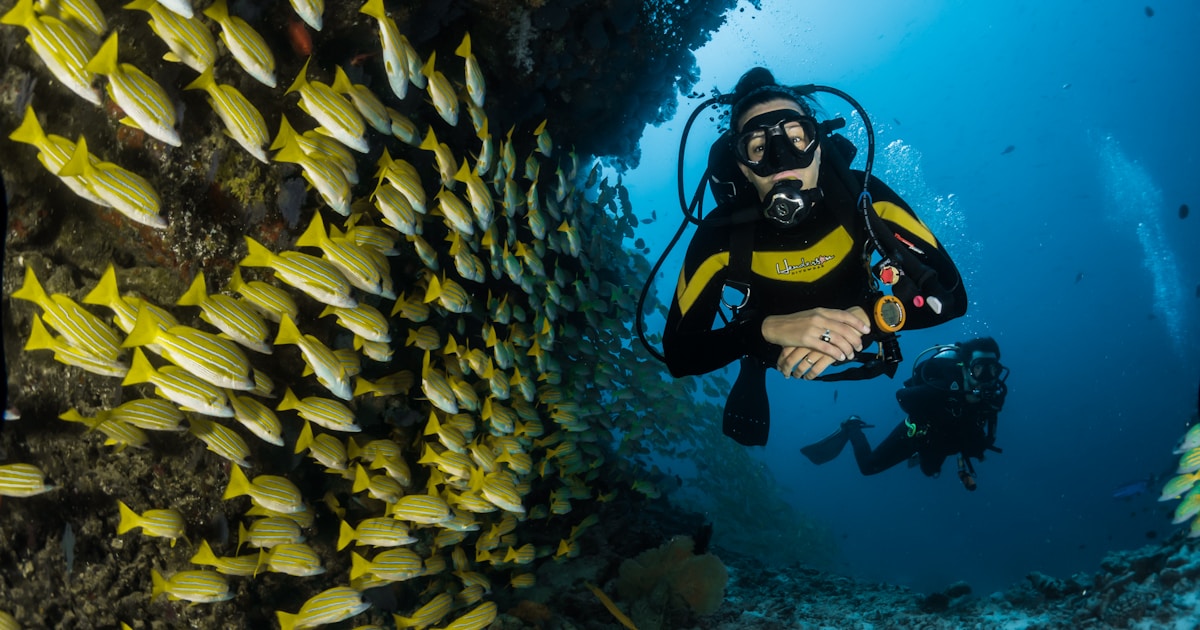
The Gili Islands sit right in the Coral Triangle, the most biodiverse marine region on earth. The diving here is consistently ranked among the best in Southeast Asia. You will see green and hawksbill sea turtles on almost every dive, sometimes five or six on a single outing. The reefs are healthy, the macro life is incredible, and there are sites for every level from absolute beginner to experienced drift diver. Gili Meno is actually known as the turtle capital of Indonesia, which tells you something about the density of marine life here.
If you are not a diver, snorkeling on the Gilis is just as rewarding. You can wade in from shore at several spots around each island and find yourself swimming alongside turtles within minutes. No boat trip needed, no guide required. Just grab a mask and walk in.
Bora Bora offers good snorkeling in the lagoon, particularly at the coral gardens, but the variety and sheer abundance of life does not match what the Coral Triangle serves up.
Browse dive shops across all three islands to find courses and guided trips.
Accommodation
Here is where the comparison gets really interesting, because both destinations have made names for themselves in the luxury space, but in very different ways.
Bora Bora is synonymous with the overwater bungalow. That is the product. You pay a premium to sleep above the lagoon, with a glass floor panel to watch fish swim underneath you and a ladder from your deck into the water. It is an iconic experience and a genuine bucket-list moment for many travelers. But that experience comes at a cost. Expect to pay $800 to $3,000 per night for a mid-range to high-end overwater villa, and options below $500 are scarce. Budget accommodation on Bora Bora barely exists.
The Gili Islands have developed a luxury scene that feels different. Less about a single gimmick and more about the overall experience. On Gili Meno, BASK is a standout, a beachfront resort with private pool villas, a stunning 35-metre infinity pool overlooking the ocean, and design that blends contemporary style with the natural surroundings. What sets it apart from the Bora Bora overwater model is that you are not confined to your room. You have the beach club, the restaurant, the underground cocktail bar Rosalee, and the entire island to explore on foot. It feels immersive rather than isolated.
And the range of accommodation on the Gilis covers every budget. You can find beautiful beachfront bungalows for $60 a night, mid-range boutique hotels for $150, and top-tier luxury villas for $300-500. That range simply does not exist on Bora Bora.
See where to stay on Gili Meno for the full breakdown.
Dining and Food
If food matters to you on holiday (and honestly, when does it not?), this is the category where the Gili Islands run away with it.
Bora Bora dining is largely resort-based. The high-end hotels have good restaurants, sometimes excellent ones, serving French-Polynesian fusion with strong seafood offerings. But you are eating at the same one or two restaurants for your entire stay unless you arrange a boat to another resort or to the main island of Vaitape, where options are limited and not particularly exciting. Meals at resort restaurants typically run $50-100 per person for dinner, and there is no real street food or casual dining scene to speak of.
The Gili Islands have quietly become one of the best food destinations in Southeast Asia, and the range is remarkable. On Gili Meno alone, Pomona serves some of the best food I have eaten anywhere in Indonesia, a South American-inspired beachfront spot built around open-fire cooking, bold flavors, and generous shared plates. The entire menu is gluten free, and the ceviche mixto and picanha steak are genuinely world class. Across at BASK, the restaurant does fresh-baked bread, flame-cooked proteins, and wood-fired pizza alongside lighter coastal plates, with the ocean right there as your backdrop. And those are just two spots on the quietest island.
On Gili Trawangan, you will find dozens of restaurants serving everything from Indonesian street food to Italian to Japanese. Gili Air has its own cafe and restaurant scene with a more bohemian, laid-back feel. You could eat somewhere different for every meal across a two-week trip and still not hit everything worth trying.
The food alone is a reason to choose the Gili Islands over Bora Bora, especially if you care about variety, value, and genuine culinary excitement.
Cost Comparison
Let's talk money, because this is where the gap between the two destinations becomes almost comical.
A week in Bora Bora for two people, including flights from Europe, a mid-range overwater bungalow, meals, and activities, will set you back somewhere between $8,000 and $15,000. That is not an exaggeration. Flights alone are often $2,000-3,000 per person return, and once you are on the island, everything from a cocktail to a boat trip to a massage carries a serious markup. Bora Bora is one of the most expensive holiday destinations on earth.
A week on the Gili Islands for two people, including flights from Europe, a beautiful beachfront hotel, meals, diving, and activities, comes in at around $2,500 to $5,000. Even if you go full luxury, book a private pool villa at BASK, eat at the best restaurants every night, and do daily dive trips, you will struggle to spend more than $6,000 for the week. That is less than the budget option in Bora Bora.
Here is a rough daily breakdown:
| Expense | Bora Bora (per person) | Gili Islands (per person) |
|---|---|---|
| Accommodation | $300-1,500 | $30-250 |
| Breakfast | $25-40 | $5-15 |
| Lunch | $30-60 | $8-20 |
| Dinner | $50-120 | $12-40 |
| Diving (2 dives) | $180-250 | $60-90 |
| Cocktail | $18-25 | $6-12 |
| Massage (1 hour) | $80-150 | $15-30 |
The value proposition on the Gili Islands is hard to argue with. You get comparable natural beauty, better diving, more dining variety, and a fraction of the cost.
Nightlife and Social Scene
Bora Bora has almost no nightlife. This is not a criticism, it is just a fact. Most resorts wind down after dinner, and the main island has a few local bars but nothing that resembles a going-out scene. If you want quiet evenings watching the stars from your bungalow deck, perfect. If you want any kind of energy after 10pm, you will be disappointed.
The Gili Islands give you both options, which is their real strength. Gili Meno is the quiet island, ideal for couples who want peaceful evenings, candlelit dinners on the beach, and the sound of waves as their nighttime soundtrack. You can descend into Rosalee at BASK for a perfectly crafted cocktail in a candlelit underground setting, or catch one of Pomona's Friday night sessions where Latin beats and beachside energy create something genuinely special without being overwhelming.
Gili Trawangan, a short boat ride away, is a different world entirely. Beach bars, live music, DJ sets, and a social scene that runs late into the night. Full moon parties, weekly events, and an energy that draws travelers from all over the world. And Gili Air sits in the middle with a relaxed but social vibe.
The beauty of the Gili setup is that you can have a quiet romantic evening on Gili Meno one night and a big social night on Gili Trawangan the next. Bora Bora gives you one speed only.
The Vibe
This might be the most important comparison of all, because these two places feel fundamentally different.
Bora Bora feels exclusive. That is by design. The resorts are spread across private motus, separated from each other and from the main island. You are paying for seclusion, and you get it. The downside is that it can feel isolating after a few days. There is not much to explore beyond your resort. No local neighborhoods to wander, no markets to browse, no spontaneous discoveries. The experience is beautiful but curated.
The Gili Islands feel alive. Three islands, each with its own personality, all within a few minutes of each other by boat. No motorized vehicles on any of them, just sand paths, bicycles, and horse-drawn carts. You walk everywhere. You stumble across a hidden cafe on Gili Air, cycle the coast of Gili Trawangan at sunset, or find a deserted stretch of beach on Gili Meno where the only footprints are yours. The islands feel like a natural paradise that you are free to explore rather than a product you are consuming.
Gili Meno, in particular, gives you that sense of being somewhere truly unspoilt. The pace is slow, the beaches are quiet, and the water is impossibly clear. People who visit often say it feels like what the Maldives must have been like thirty years ago, but with world-class food and genuine warmth from the local community.
Activities Beyond the Beach
Bora Bora offers lagoon tours, jet ski excursions, helicopter rides over Mount Otemanu, and resort-based spa treatments. These are all wonderful, but they come with significant price tags and most require booking through your hotel. Independent exploration is limited.
The Gili Islands give you a genuinely long list of things to do without needing to organize or pay resort prices. Diving and snorkeling are the headliners, but there is also paddleboarding and kayaking, cycling the islands, yoga and wellness retreats, cooking classes, boat tours, and sunset walks that cost nothing at all. You can visit the underwater sculpture installation Nest off Gili Meno, watch baby turtles being released at conservation projects, or just spend an afternoon hopping between islands trying different restaurants and beaches.
The key difference is independence. On the Gili Islands, you build your own days. On Bora Bora, your resort builds them for you.
Who Should Choose Bora Bora
Bora Bora makes sense if you want the overwater bungalow experience as a once-in-a-lifetime bucket list moment. If budget is not a major concern and you want pure seclusion with minimal decision-making, Bora Bora delivers a polished, premium product. It is also a strong choice if you are combining it with a wider French Polynesia trip, visiting Tahiti and Moorea alongside Bora Bora.
It works best for couples who want to completely switch off, do not need variety in dining or nightlife, and want to feel like they are at the edge of the world.
Who Should Choose the Gili Islands
The Gili Islands are the better choice for almost everyone else. If you want luxury with freedom, world-class diving, incredible food, the ability to explore multiple islands, and a trip that does not require a second mortgage, the Gilis are hard to beat.
They work beautifully for honeymooners, especially those who want a mix of romance and adventure. They suit foodies who want to eat their way through dozens of restaurants and cafes rather than being limited to one hotel kitchen. They are ideal for divers and snorkelers who want to swim with turtles every single day. And they appeal to travelers who want to feel like they have discovered something rather than bought something.
For a full trip-planning guide, start with our Gili Islands itinerary and best time to visit guide.
The Verdict
Here is what it comes down to. Bora Bora sells you a dream. The Gili Islands let you live one.
Bora Bora is a stunning, iconic destination that deserves its reputation. But it is expensive, hard to reach, and once you are there, the experience is somewhat limited to your resort. The Gili Islands offer comparable natural beauty, far better diving, a food scene that rivals much bigger destinations, and the freedom to create your own adventure across three unique islands, all at a fraction of the price.
If someone put both trips in front of me right now and said pick one, I would be on a fast boat to Gili Meno before they finished the sentence. That quiet stretch of white sand, a long lunch at Pomona with friends, a sunset cocktail at BASK watching the sky turn pink over Gili Trawangan in the distance, and then a dive the next morning where you are face to face with sea turtles on a coral reef so colorful it barely looks real.
That is how life should feel. And you do not need to spend $15,000 to find it.
Start planning your trip with our complete Gili Islands directory and explore everything the islands have to offer.
Tags