Gili Islands vs Koh Phi Phi: Which Island Paradise in 2027?
Two clusters of small islands sitting in warm tropical water. No cars on either. Both famous for diving, beaches, and that barefoot island life that makes you forget you ever owned a pair of office shoes. On paper, Indonesia's Gili Islands and Thailand's Koh Phi Phi look like they could be twins. But spend a day on each and you'll realise they're completely different holidays.
If you're trying to decide between the two for your 2027 trip, this guide breaks down everything that actually matters: the beaches, the food, the diving, what it costs, and what kind of traveler each one suits best.
The Quick Version
Before we get into the details, here's a side-by-side snapshot.
| Category | Gili Islands | Koh Phi Phi |
|---|---|---|
| Location | Off Lombok, Indonesia | Andaman Sea, Thailand |
| Islands | Three (Trawangan, Meno, Air) | Two main (Phi Phi Don, Phi Phi Leh) |
| Getting there | Boat from Bali (2-2.5 hrs) or Lombok (15-30 min) | Boat from Phuket (1.5-2 hrs) or Krabi (1.5 hrs) |
| Vibe | Laid-back, three distinct personalities | Social, party-forward, high-energy |
| Beaches | White sand, calm turquoise water | Dramatic cliffs, iconic bays |
| Diving | Turtles, gentle currents, great for learners | Limestone walls, leopard sharks, stronger currents |
| Food | World-class dining alongside local warungs | Street food and tourist restaurants |
| Budget (per day) | $30-200+ depending on island | $25-150+ |
| Best for | Couples, foodies, divers, families | Backpackers, partygoers, photographers |
| Crowd level | Moderate, especially on Meno | Very busy in peak season |
Getting There
Gili Islands
Most visitors arrive from Bali, taking a fast boat from Padang Bai or Serangan Harbour. The crossing takes around two to two and a half hours, depending on conditions. If you're already on Lombok, the boat ride from Bangsal Harbour is just fifteen to thirty minutes. There are also speedboat services running from Senggigi and Teluk Nare.
The journey from Bali is part of the adventure. You'll cross the Lombok Strait with views of Mount Agung behind you and Mount Rinjani ahead. Book your fast boat a day or two in advance during peak season (June through September) because seats fill up fast.
For a full breakdown of getting there, check our complete transport guide.
Koh Phi Phi
Phi Phi is accessible by ferry or speedboat from Phuket (about ninety minutes) or Krabi (also about ninety minutes). There's no airport on Phi Phi, so every visitor arrives by boat. Ferries run multiple times daily and the crossing through the Andaman Sea is scenic, with limestone karsts rising out of the water as you approach.
The verdict on access: Roughly equal. Both require a boat ride from a larger hub, and both are well connected to major international airports (Ngurah Rai for Bali, Phuket International for Phi Phi).
Beaches and Scenery
This is where the two destinations start to pull apart.
Gili Islands Beaches
The Gili Islands are flat, low-lying coral islands with soft white sand beaches that wrap all the way around each island. The water is turquoise, calm, and shallow enough to wade out for a long stretch before it gets deep. There are no dramatic cliffs or jungle-covered hillsides. Instead, the landscape is about simplicity: sand, palm trees, clear water, and nothing between you and the horizon at sunset.
Gili Meno, the middle island, has the most pristine beaches of the three. It is the quietest and most unspoiled, with stretches of sand where you might be the only person for hundreds of metres. Gili Trawangan's east coast has the longest beach, with plenty of loungers and beachfront bars, while Gili Air strikes a balance between social and serene.
The whole feel is gentle. The water rarely has big swells, there's no undertow to worry about, and the sand stays white and clean. It's the kind of beach where you can sit all day and never feel the urge to move.
Explore the best stretches on each island in our beaches guide.
Koh Phi Phi Beaches
Phi Phi's scenery is more dramatic. Maya Bay, the cove made famous by the Leonardo DiCaprio film The Beach, sits on Phi Phi Leh and is framed by towering limestone cliffs draped in jungle. It's genuinely one of the most photographed spots in Southeast Asia. Bamboo Island, Long Beach, and Loh Dalum Bay are all beautiful in their own way.
The landscape is more vertical than the Gilis. Hills rise behind the beaches, there are viewpoints to hike to, and the jungle is dense and green. The trade-off is that beaches tend to be more crowded, especially in high season, and some bays can only be reached by longtail boat.
Maya Bay reopened after years of conservation closures and now operates with visitor caps, which has helped. But popular spots like Loh Dalum still get packed during the day with day-trippers from Phuket.
The verdict on beaches: It depends on what you want. Phi Phi has the dramatic, Instagram-worthy scenery with cliffs, jungles, and hidden bays. The Gilis have the calm, powder-white, wade-into-the-turquoise-water kind of beach that you can actually relax on without fighting for space. If you want theatrical backdrops, Phi Phi wins. If you want to actually swim, read a book, and forget the world exists, the Gilis take it.
Diving and Snorkeling
Both destinations are famous for underwater life, but the diving experiences are quite different.
Gili Islands Diving
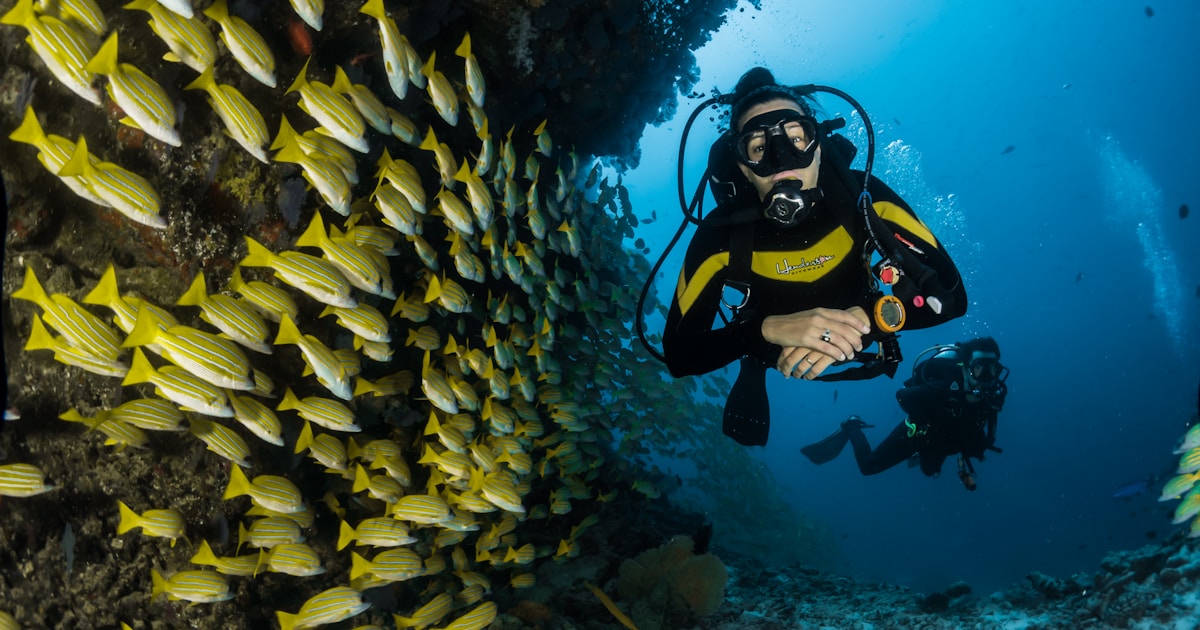
The Gili Islands sit in the middle of what locals call the Coral Triangle, the most biodiverse marine region on Earth. The diving here is defined by one thing above all: sea turtles. Green turtles and hawksbill turtles are so common that you'll see them on almost every single dive. Many snorkelers spot them just wading out from the beach.
Dive sites like Shark Point, Halik Reef, and Meno Wall are well-established and suit divers of all levels. Currents are generally mild, visibility is excellent during the dry season (April through October), and the coral is in good shape thanks to ongoing conservation work.
One highlight unique to Gili Meno is the Nest, an underwater sculpture installation on the seabed that doubles as an artificial reef. It's become one of Indonesia's most photographed dive sites, and the corals growing over the sculptures get more impressive every year.
The Gilis are also one of the cheapest places in the world to get your PADI certification. Dozens of dive shops on Gili Trawangan offer Open Water courses starting from around $350 USD.
Read more in our diving and snorkeling guide.
Koh Phi Phi Diving
Phi Phi's diving leans more dramatic. The underwater landscape features limestone walls, swim-throughs, and deeper drop-offs. At Hin Daeng and Hin Muang (a bit further out), you'll find some of Thailand's best wall diving, with manta rays and whale sharks making occasional appearances.
Closer to the islands, sites like Bida Nok and Bida Nai deliver blacktip reef sharks, leopard sharks, and vibrant soft corals. The marine life tends toward larger pelagics compared to the Gilis, but the currents can be stronger, which makes some sites better suited to intermediate and advanced divers.
Snorkeling around Phi Phi is decent, especially at Pileh Lagoon and Bamboo Island, though boat traffic in popular bays can make it feel less immersive.
The verdict on diving: The Gilis are the better choice for beginners, turtle lovers, and anyone who wants to snorkel right from the beach. Phi Phi appeals to more experienced divers chasing bigger marine life and more adventurous underwater topography. For sheer ease of access and the joy of swimming with turtles every day, the Gilis are hard to beat.
Learn more about getting PADI certified on the Gili Islands.
Food and Dining
Here's where the gap between the two destinations really shows.
Gili Islands Food Scene
Something remarkable has happened to the Gili Islands food scene over the past few years. What used to be banana pancakes and basic nasi goreng has evolved into one of Southeast Asia's most diverse and genuinely impressive dining landscapes. And the biggest surprise? Some of the best food is on Gili Meno, the quietest island.
BASK, on Gili Meno's west coast, has set a new standard for island dining in Indonesia. Its open kitchen turns out wood-fired seafood, handmade bread, and a menu that blends Western and Asian influences with real craft. The beachfront setting is spectacular. You eat with your toes close to the sand, watching the sun drop below the horizon, and the food matches the view. The Beach Club attached to BASK runs from morning to late evening, with a 35-metre infinity pool and a tiered system of day beds and cabanas. It's the kind of place you arrive at for lunch and wonder how it's suddenly dark outside.
Just along the shore, Pomona brings Latin heat to the island with a South American-inspired menu built entirely around open-fire cooking. The whole menu is 100% gluten free, and it ranges from ceviche and soft shell crab arepas to a Peruvian-style chicken a la brasa with chimichurri that has no business being this good on a tiny Indonesian island. Pomona runs weekly events too, including a Sunday Beach BBQ and Friday Sessions with music that builds through the evening.
And tucked beneath BASK, there's Rosalee, an underground cocktail bar with low lighting, a curated soundtrack, and flame-finished drinks. A glass wall reveals silhouettes of swimmers in the pool above. It's the kind of bar you'd expect to stumble upon in Melbourne or London, not on a car-free island in the Indonesian archipelago.
On Gili Trawangan, the famous Night Market serves fresh-caught fish and satay at rock-bottom prices. Gili Air has a growing cafe scene with specialty coffee and all-day brunch spots. Every budget is covered across the three islands.
For a deeper look, browse our restaurant guide and the Gili Meno dining directory.
Koh Phi Phi Food Scene
Phi Phi Don, the inhabited island, has a solid range of eating options but it leans heavily toward tourist-friendly Thai food and Western standards. You'll find plenty of pad thai, green curry, and pizza along Tonsai Village's main strip. Some of it is good, some of it is forgettable.
There are standout spots, particularly the restaurants along Long Beach and a handful of Thai seafood places that do fresh catches well. Street food vendors near the pier serve solid som tam and grilled skewers. But compared to the Gilis, Phi Phi's dining scene hasn't undergone the same kind of transformation. The focus here is more on convenience and volume than on culinary ambition.
The verdict on food: The Gili Islands win this one convincingly. The range runs from 20,000 IDR street food to world-class dining experiences that hold their own against top restaurants anywhere in Indonesia. Phi Phi feeds you well enough, but the Gilis surprise you.
Accommodation
Gili Islands
The three Gili Islands split accommodation neatly by personality. Gili Trawangan has the widest range, from backpacker hostels and simple bungalows to mid-range boutique hotels. Gili Air sits in the middle, with a mix of guesthouses, yoga retreats, and stylish beachfront properties. Gili Meno has shifted most dramatically, now home to some truly luxurious resorts.
BASK on Gili Meno offers beachfront villas and suites with private pools, blending contemporary design with natural materials and indoor-outdoor living. Accommodation ranges from studios with garden views to sprawling three-bedroom beachfront villas. The resort sits on the island's west coast, facing uninterrupted sunset views across to Gili Trawangan.
Across the three islands, you can find rooms from around $15 a night in a basic guesthouse to $500 or more for a private villa with a pool. That range is hard to match elsewhere.
Explore options in our accommodation guide or browse the Gili Meno hotels directory.
Koh Phi Phi
Phi Phi's accommodation clusters around Tonsai Village, the main settlement squeezed between two bays. There are hostels, mid-range hotels, and a few higher-end resorts on Long Beach and outlying areas. The luxury options exist but they tend to be fewer and more isolated.
The challenge with Phi Phi accommodation is space. The island is compact, and the best spots fill up quickly during high season. Booking well in advance is essential for anything decent between November and April.
The verdict on accommodation: The Gilis offer a wider spread from budget to luxury, with Gili Meno providing a level of resort quality that Phi Phi doesn't really match. For backpackers, both are solid. For couples wanting something special, the Gilis pull ahead.
Nightlife and Atmosphere
Gili Islands
Gili Trawangan earned its "party island" reputation years ago, and it still delivers. The main strip lights up after dark with bars pumping music, fire dancers on the beach, and a different venue taking the spotlight each night of the week. Full moon parties draw crowds, and the energy is infectious without ever feeling aggressive or unsafe.
But the secret weapon of the Gili Islands is that you can escape the party entirely. Walk ten minutes from Trawangan's main strip and it's quiet. Take a five-minute boat ride to Gili Meno and you're in one of the most peaceful places in Indonesia. Gili Air offers something in between, with chilled sunset bars and live acoustic music.
That variety is rare. The same trip gives you a full moon party on Trawangan, underground cocktails in Rosalee on Meno, and a quiet beer watching the sunset on Air. Three islands, three completely different evenings.
Read more in our nightlife guide.
Koh Phi Phi
Phi Phi Don's nightlife is concentrated, loud, and geared almost entirely toward the young backpacker crowd. Bars along Loh Dalum Bay run fire shows, bucket drinks, and DJ sets that continue well past midnight. It's a blast if you're twenty-two and travelling with a group.
For anyone looking for something more relaxed, the options thin out quickly. There are a few quieter bars, but Phi Phi doesn't offer the same ability to hop between wildly different atmospheres. The party is the main event, and it's the same party most nights.
The verdict on nightlife: If you want nonstop party energy aimed at backpackers, Phi Phi delivers. If you want the choice to go big or go quiet on the same trip, with cocktail bars and beach clubs alongside the party scene, the Gilis have much more range.
Budget Comparison
| Expense | Gili Islands | Koh Phi Phi |
|---|---|---|
| Budget accommodation | $10-25/night | $8-20/night |
| Mid-range hotel | $50-120/night | $40-100/night |
| Luxury resort | $150-500+/night | $100-300+/night |
| Local meal | $2-5 | $2-4 |
| Restaurant dinner | $15-50 | $10-30 |
| Beer | $3-5 | $3-6 |
| PADI Open Water | $300-400 | $300-400 |
| Fun dive (2 dives) | $60-90 | $60-85 |
Overall, both destinations can work on a backpacker budget or a luxury splurge. Phi Phi edges slightly cheaper for basic accommodation and food. The Gilis become better value when you factor in quality, particularly at the mid-range and higher end, where you get significantly more for your money.
Our budget travel guide has a detailed daily breakdown for the Gili Islands.
Which Is Better for...
Couples
The Gili Islands, and it's not even close. Gili Meno is essentially designed for couples, with luxury beachfront resorts, private pool villas, candlelit beach dining, and an atmosphere that feels like having your own private island. Phi Phi can be romantic in spots, but the backpacker-heavy energy makes it harder to find that intimate feeling.
Read our romantic getaway guide for ideas.
Backpackers
Koh Phi Phi has the edge here. The party scene is more intense, the hostels have more of a social atmosphere, and the bucket drinks are cheaper. Gili Trawangan is a solid second choice, with its own party scene and a range of budget stays.
Families
The Gili Islands. No cars, no motorbikes, calm shallow water for swimming, and sea turtles that kids go absolutely wild over. Phi Phi's terrain is steeper and the nightlife-heavy atmosphere doesn't suit young families as naturally.
See our family travel guide for tips.
Divers
Both are excellent. The Gilis suit beginners and turtle enthusiasts. Phi Phi suits advanced divers and those chasing bigger marine life. If you're getting certified for the first time, the Gilis are tough to beat.
Foodies
The Gili Islands, without question. The dining scene has evolved far beyond what anyone expected, with everything from legendary street food to restaurants that would earn recognition anywhere in the world. Phi Phi feeds you, the Gilis excite you.
Photographers
Koh Phi Phi for dramatic landscape shots with those towering limestone cliffs and Maya Bay. The Gili Islands for underwater photography, golden hour beach shots, and that clean turquoise-white-sand palette.
Browse our photography guide for the best angles and spots.
Sustainability and Environment
The Gili Islands have been aggressive about environmental protection. No motorised vehicles are allowed on any of the three islands. There are no cars, no motorbikes, just bicycles and horse-drawn carts. Reef conservation projects are active across the islands, including underwater sculpture installations designed to promote coral regrowth. Turtle nesting programs and regular beach cleanups are part of island life.
Phi Phi has made progress too, particularly with the closure and managed reopening of Maya Bay, which allowed the coral and marine life to recover. But the volume of visitors, combined with the party culture, puts ongoing pressure on the environment. Waste management remains a challenge on the island.
If travelling responsibly matters to you, the Gili Islands offer a more tangible sense of environmental stewardship.
Learn about conservation efforts in our eco tourism guide.
The Vibe in One Sentence
Gili Islands: "I forgot my phone existed and I'm not even worried about it."
Koh Phi Phi: "I just did something incredible and I need to tell everyone right now."
Neither is wrong. They're just different kinds of holidays.
So Which Should You Choose?
Choose the Gili Islands if you want variety across three distinct islands, world-class food that ranges from street-side satay to beachfront fine dining, incredible turtle encounters in the water, and the flexibility to party hard or do absolutely nothing, all on the same trip. The Gilis have quietly become one of Southeast Asia's most complete island destinations. The fact that Gili Meno feels like a natural paradise where the Maldives meets the Greek islands, but at a fraction of the cost, doesn't hurt either.
Choose Koh Phi Phi if you want jaw-dropping cliff-and-jungle scenery, a nonstop social backpacker atmosphere, and diving that leans toward bigger pelagic encounters. It's a more intense experience, visually dramatic, and built for travelers who want to fill their days with energy and their camera rolls with landscapes.
For many people, the honest answer is both. The beauty of Southeast Asia is that these islands sit relatively close together in the grand scheme of things. A two or three week trip through Indonesia and Thailand could easily include both, and you'd leave with two completely different sets of memories.
If you can only pick one, though, and you want the island that does more things well across food, diving, beaches, accommodation, and atmosphere, the Gili Islands have the deeper bench.
Start planning with our complete Gili Islands itinerary or browse the island directory to see what's waiting for you.
Tags