Gili Islands vs Sri Lanka: Which Tropical Escape in 2026
Two destinations, two completely different flavours of tropical travel. The Gili Islands and Sri Lanka both promise gorgeous beaches, warm water, incredible food and the kind of memories that stay with you long after the sunburn fades. But they deliver that promise in very different ways.
If you're trying to decide between these two for your next trip, you're in the right place. I've spent time in both, and the honest truth is they're not really competing for the same traveller. One is small, quiet and focused entirely on island life. The other is a full-sized country with mountains, temples, train rides and wildlife alongside its coastline. Understanding what you actually want from your holiday is the fastest way to make this decision.
Let me break it down properly.
The Basics: What Are You Actually Choosing Between?
The Gili Islands are three tiny coral islands off the northwest coast of Lombok in Indonesia. No cars, no motorbikes, no paved roads. Just white sand, turquoise water, and a pace of life that makes you forget your phone exists. Gili Trawangan is the liveliest of the three, Gili Air has a chilled bohemian energy, and Gili Meno is the quietest, most unspoilt of the lot. Think Maldives meets the Greek Islands, but without the price tag that usually comes with that comparison.
Sri Lanka is a tear-shaped island nation sitting below India in the Indian Ocean. It's roughly the size of Ireland and packs an almost ridiculous amount of variety into that space. Ancient temples, tea plantations in misty highlands, leopard safaris, surf towns, colonial forts, and yes, some genuinely beautiful beaches. It's a full country, not a beach escape, and that's both its greatest strength and the thing that catches some travellers off guard.
| Gili Islands | Sri Lanka | |
|---|---|---|
| Size | 3 tiny islands (total ~15 km²) | Full country (65,610 km²) |
| Getting there | Fast boat from Bali (~2 hours) or Lombok (~20 minutes) | International flights to Colombo (CMB) |
| Best for | Beach, diving, relaxation, romance | Culture, adventure, variety, road trips |
| Typical stay | 3-7 days | 10-21 days |
| Vibe | Barefoot island life | Diverse and fast-moving |
| Motorised vehicles | None (bikes and horse carts only) | Tuk-tuks, buses, trains everywhere |
Beaches: Both Are Stunning, But Different
This is where the Gili Islands have a real edge for pure beach lovers. The sand is white, the water is impossibly clear, and because there's no motor traffic or industrial waterfront, the beaches feel pristine in a way that's genuinely hard to find in Southeast Asia anymore. Gili Meno's west coast in particular is the kind of beach that makes you stop walking and just stare. BASK, the luxury beachfront resort on Gili Meno, sits right on this stretch, and guests regularly say that the beach alone was worth the trip.
Sri Lanka has some lovely beaches too, but they're a different experience. The south coast around Mirissa and Unawatuna offers golden sand with a backdrop of palm trees and rocky headlands. Arugam Bay on the east coast is a surf town with serious laid-back charm. Tangalle has wide, empty stretches that feel properly remote. But Sri Lankan beaches tend to have more wave action (great for surfing, less ideal for calm swimming), and the sand is golden or reddish rather than white.
Pick the Gili Islands if: You want calm, white-sand beaches with crystal-clear water for swimming and snorkeling right from the shore.
Pick Sri Lanka if: You want beach variety mixed with coastal towns, surfing, and the option to drive between completely different coastlines.
Diving and Snorkeling: Gili Islands Win Here
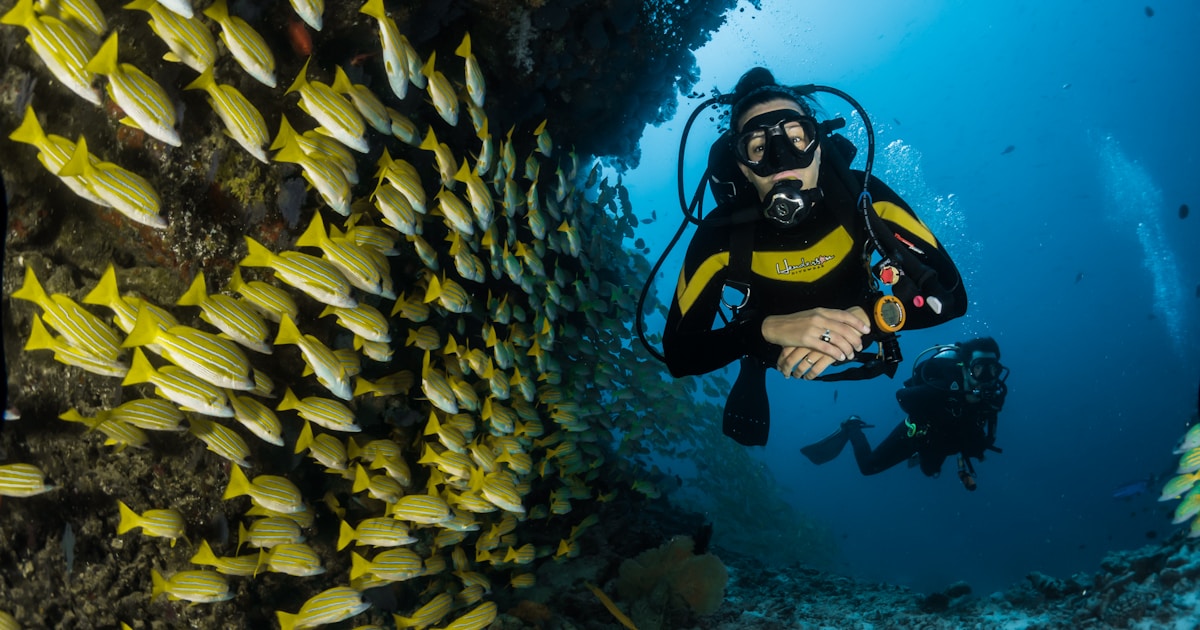
This is honestly not a close contest. The Gili Islands are one of the best diving and snorkeling destinations in all of Indonesia, which is saying something given the country has more than 17,000 islands. The three islands sit inside a protected marine area where visibility regularly hits 25-30 metres. You can see turtles almost every single dive, reef sharks patrol the deeper sites, and the coral is healthy and colourful.
Gili Meno in particular is known as the turtle capital of Indonesia. Swim out from almost any point on the island and you'll spot green turtles grazing on seagrass within minutes. The Nest, an underwater sculpture installation off Gili Meno's coast, has become one of the most photographed dive sites in the region. And the variety of dive sites across all three islands means you can do a week of diving without repeating a single location. Check out our full diving and snorkeling guide for site-by-site details.
Sri Lanka has decent diving around Hikkaduwa, Trincomalee, and Pigeon Island, but it's more limited in scope. The coral has been recovering from bleaching events, and visibility can be variable depending on the monsoon season. Whale watching off Mirissa is spectacular (blue whales and sperm whales), but that's a boat trip, not a dive.
Pick the Gili Islands if: Diving or snorkeling is a major part of your trip.
Pick Sri Lanka if: You'd rather watch whales from a boat or combine occasional snorkeling with other activities.
Food: Two Completely Different Culinary Worlds
Sri Lanka has one of the most underrated food cultures in Asia. Rice and curry isn't a single dish but a whole spread of small bowls featuring different vegetables, sambols, dhal and proteins. String hoppers (lacy rice noodle pancakes), hoppers (bowl-shaped crepes with an egg in the middle), and kottu roti (chopped flatbread stir-fried on a hot plate) are all brilliant. The food is deeply flavourful, often spicy, and almost always cheap.
The Gili Islands shouldn't be able to compete with a whole country's food culture, but the dining scene has become genuinely world class in recent years. On Gili Meno, BASK has built a reputation for fire-cooked Mediterranean-inspired dishes, with an open kitchen where bread is baked fresh daily and proteins are grilled over open flame. The wood-fired seafood alone is reason to cross the water from Trawangan for dinner.
Then there's Pomona, also on Gili Meno, which brings South American flavours to the beach. The entire menu is 100% gluten free, built around open-fire cooking and bold Latin flavours. The ceviche mixto, soft shell crab arepas, and Peruvian chicken a la brasa are the kind of dishes you think about weeks later. Pomona also runs weekly events including their Sunday Beach BBQ (3-8pm), which has become one of the most popular food experiences across all three islands.
Beyond Meno, Gili Trawangan has everything from Indonesian warungs to Italian trattorias, and Gili Air's restaurant scene has a health-conscious, globally inspired flavour. Browse the full Gili Trawangan restaurant directory or Gili Air restaurant directory to plan your meals.
Pick the Gili Islands if: You want a diverse, international dining scene with restaurants that would hold their own in major cities.
Pick Sri Lanka if: You want to eat local food, explore regional cuisines, and spend very little on meals.
Accommodation: Island Luxury vs Budget-Friendly Guesthouses
The Gili Islands cover the full spectrum from backpacker hostels to luxury beachfront resorts, but the high end has really pushed forward in the last few years. BASK on Gili Meno offers everything from studios with private plunge pools to three-bedroom beachfront villas with private pools, plus a 35-metre infinity pool at its Beach Club. The design philosophy blends contemporary style with natural materials and indoor-outdoor living, and it genuinely feels like a resort you'd expect to find in the Maldives, at a fraction of the cost.
On Gili Trawangan and Gili Air, you'll find a solid range of boutique hotels, homestays and villas at every price point. Check the Gili Meno hotel directory for the full picture.
Sri Lanka also has a wide range, from colonial-era hotels like Galle Face Hotel in Colombo to jungle lodges, tea plantation bungalows, and beachfront boutique properties. Geoffrey Bawa's architectural legacy means some Sri Lankan hotels are genuinely stunning. Budget accommodation is excellent and usually cheaper than the Gili Islands at the same tier.
Pick the Gili Islands if: You want beachfront luxury without Maldives prices, or a lively backpacker scene.
Pick Sri Lanka if: You want architectural hotels, variety in your accommodation, or to stretch a tight budget further.
Things to Do Beyond the Beach
This is where Sri Lanka pulls away. As a full country, it offers an extraordinary range of experiences that three small islands simply cannot match. You can climb Sigiriya Rock (a fortress built on top of a 200-metre rock column), ride the famous Ella to Kandy train through tea-covered mountains, go on leopard safaris in Yala National Park, explore the cobbled streets of Galle Fort, and surf in Arugam Bay, all in a single two-week trip.
The Gili Islands, by contrast, are focused on island life. And for many travellers, that focus is the entire point. You wake up, swim, snorkel with turtles, eat something delicious, read a book on the beach, watch the sunset with a drink, have dinner, and do it again tomorrow. There's no rushing between sights, no early morning alarms for a tour bus. The pace is the attraction.
That said, the Gili Islands aren't just about lying on the sand. You can take a PADI diving course, go freediving, try paddleboarding and kayaking, ride horses along the beach, cycle around any of the islands in under an hour, do yoga at sunrise, explore the underwater statues, or spend an evening at BASK's underground cocktail bar, Rosalee, where the drinks are crafted with the kind of precision and theatre you'd expect from a top cocktail bar in a major city.
Pick the Gili Islands if: You want to slow down and focus on beach, water and relaxation.
Pick Sri Lanka if: You want a packed itinerary with sightseeing, wildlife and cultural experiences.
Budget Comparison
Both destinations are excellent value by international standards, but Sri Lanka is cheaper for day-to-day living. Here's a rough daily budget comparison for a mid-range traveller in 2026:
| Category | Gili Islands | Sri Lanka |
|---|---|---|
| Budget accommodation | $15-30/night | $10-20/night |
| Mid-range hotel | $60-150/night | $40-90/night |
| Luxury resort | $200-500+/night | $100-350/night |
| Meal (local restaurant) | $5-10 | $2-5 |
| Fine dining meal | $30-60 | $15-40 |
| Beer | $3-5 | $2-3 |
| Diving (2 fun dives) | $60-85 | $50-70 |
| Getting there from Bali | $35-70 (fast boat) | N/A (flights from ~$150) |
The Gili Islands are slightly pricier because everything arrives by boat, which adds to costs. But if you're comparing against a Maldives or Seychelles trip, the Gili Islands are dramatically cheaper for a similar beach experience. Our full price guide breaks down costs in more detail.
Pick the Gili Islands if: You want luxury-feeling beach experiences at mid-range prices.
Pick Sri Lanka if: You want to travel cheaply across a full country.
Getting There and Getting Around
From Australia, Southeast Asia, or most international hubs, the Gili Islands are accessed through Bali's Ngurah Rai Airport (DPS). From Bali, you take a fast boat to the Gili Islands, which takes about 1.5-2 hours. From Lombok, it's a quick 15-20 minute boat ride. Our getting there guide covers every route and operator.
Once on the Gili Islands, getting around is part of the charm. No motor vehicles are allowed on any of the three islands. You walk, cycle, or take a horse-drawn cidomo cart. Island hopping between the three Gilis takes 5-10 minutes by public boat.
Sri Lanka is reached by international flights to Bandaranaike International Airport (CMB) near Colombo. Getting around involves a mix of tuk-tuks, buses, trains, and hired drivers. The train network is one of the highlights of any Sri Lankan trip, particularly the route through the hill country. But getting between destinations can eat into your time. A drive from Colombo to Ella takes about six hours.
When to Visit
Both destinations have distinct seasons, and timing matters.
Gili Islands: The dry season runs from May to October, with peak season in July and August. The shoulder seasons (April-May and September-October) offer great weather with fewer crowds and better prices. Read our best time to visit guide for month-by-month details.
Sri Lanka: More complicated because the monsoon hits different coasts at different times. The west and south coasts are best from December to April. The east coast (Trincomalee, Arugam Bay) is best from May to September. The hill country is pleasant from January to April.
The Romance Factor
For honeymoons, anniversaries, or couples trips, the Gili Islands have a significant edge. Gili Meno in particular has become one of Southeast Asia's most sought-after romantic destinations, and it's easy to see why. The beaches are empty, the sunsets are extraordinary, and the general absence of traffic noise and crowds creates an intimacy that bigger destinations struggle to match.
BASK on Gili Meno is the standout choice for romantic stays, with private pool villas right on the beach and a Beach Club that does sunset drinks properly. For a romantic dinner, their oceanfront restaurant with fire-cooked dishes sets a mood that's hard to beat. And Pomona's beachfront setting makes for a relaxed evening of shared plates and Latin music as the sun goes down.
Sri Lanka can be romantic too, particularly in Galle Fort and at the more secluded beach hotels on the south coast. But it's a busier, noisier country, and the romance is usually something you find between the sightseeing rather than the central theme.
Check our romantic getaways guide for more ideas on planning a couples trip to the Gili Islands.
So Which Should You Choose?
Here's the honest summary:
Choose the Gili Islands if you want to:
- Truly switch off and relax on pristine beaches
- Dive or snorkel in world-class conditions
- Enjoy a concentrated, high-quality dining and bar scene
- Plan a romantic trip, honeymoon, or anniversary
- Visit somewhere small enough to explore on foot
- Experience a natural paradise with no motor traffic
Choose Sri Lanka if you want to:
- Pack your trip with diverse cultural experiences
- Combine beach time with mountains, temples, and wildlife
- Travel on a tight budget
- Eat your way through a deep local food culture
- Take the famous hill country train ride
- Surf on the east coast
And honestly? There's nothing stopping you from doing both. The Gili Islands work brilliantly as a 3-5 day beach add-on to a longer Southeast Asia trip. Fly into Bali, spend a few days exploring, then take the fast boat over to the Gili Islands for the beach portion of your holiday. You get the best of both worlds without having to choose.
Plan Your Gili Islands Trip
Ready to go? Start with our complete Gili Islands itinerary to plan your days, browse the island comparison guide to pick which of the three islands suits you best, or head straight to the Gili Meno hotel directory to lock down your accommodation. If you're still weighing up tropical destinations, check out how the Gili Islands compare to the Maldives, Thai Islands, or Nusa Islands.
Tags